Quick answer: The most effective backyard transformations in 2026 pair a clear purpose (entertaining, play, gardening, or relaxation) with structural anchors like a patio or deck, layered planting, and lighting. The costliest mistake homeowners make is committing to a design they've never actually seen in their own yard. Visualize it first.
What is a backyard transformation? A backyard transformation is a planned redesign of an outdoor space that changes its function, its appearance, or both. It ranges from a basic landscaping refresh to a full outdoor living build with a kitchen, pool, and covered structure. What separates a transformation from a pile of purchases is intention — a transformed yard has a clear purpose and a cohesive design, not a deck bought one summer and a fire pit bolted on the next.
This guide draws on 2026 outdoor living trend data, home improvement ROI figures, and patterns we've seen generating AI-powered previews for landscaping and backyard renovation projects.
Why most backyard transformations fail — and how to avoid that
Most backyard transformations go wrong at the same point: the homeowner signs off on a design they've never actually seen in their own yard.
They approve a proposal built from a mood board of someone else's property, or a 2D site plan that shows dimensions but not atmosphere. The finished space rarely matches what they pictured. Then come the change orders, the budget creep, and the nagging sense that something about the yard is just slightly off.
Harvard researchers project Americans will spend a record $524 billion on home remodeling in 2026, and outdoor living is one of the categories driving that number. The homeowners who end up happy with the result almost always started with a design they could see in their actual space, not a stock render of someone else's.
The 12 ideas below are ordered by function first and aesthetics second — that's the sequencing that produces a yard people actually use instead of one that just photographs well.
12 backyard transformation ideas for 2026
1. Define a clear outdoor living zone
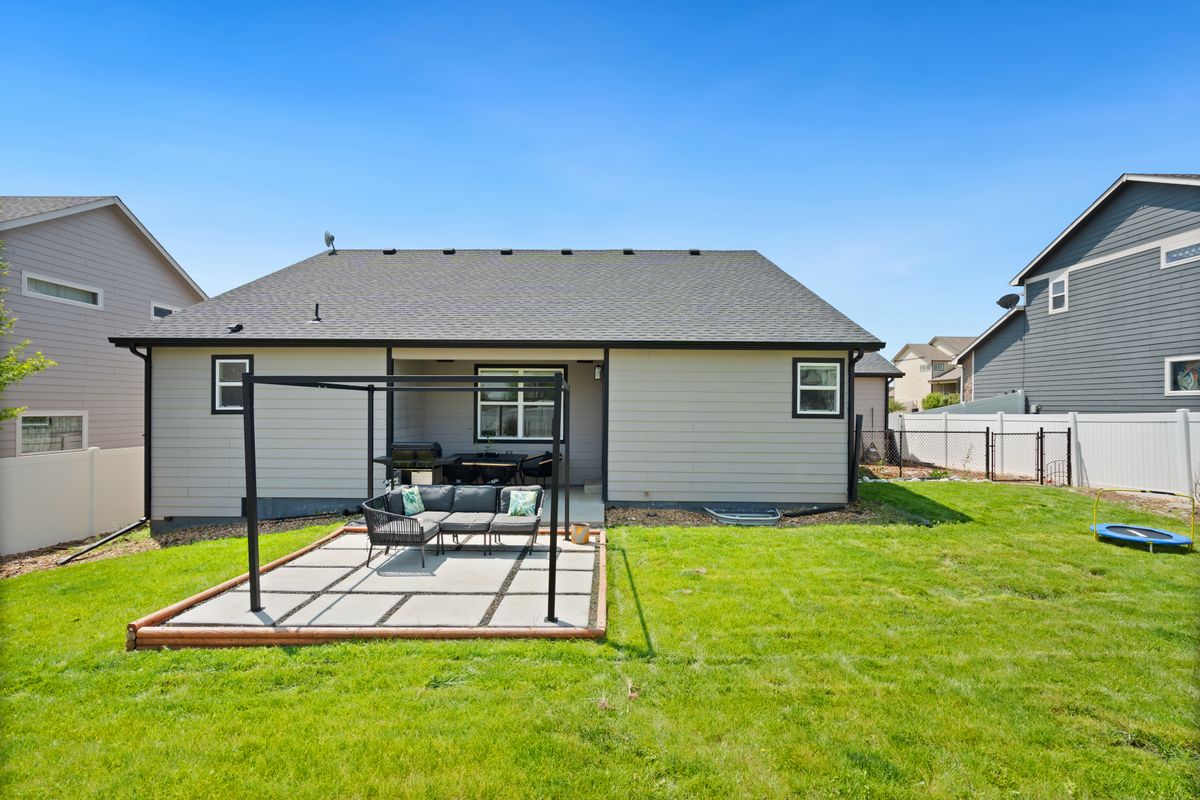
The highest-impact change for most backyards is also the simplest: carve out a defined seating area with a level surface, shade, and furniture built for the weather. A patio or deck with a pergola and an outdoor sofa turns an unused stretch of lawn into a room. Homeowners consistently underestimate how much this one move changes the feel of the entire yard — it's the difference between a lawn you mow and a space you actually sit in.
2. Add an outdoor kitchen or grill station
An outdoor kitchen with a built-in grill, counter space, and storage extends the home's living area and makes the backyard a genuine entertainment destination. Entry-level builds with a gas grill and concrete counter start around $3,000. Full kitchens with refrigeration, a sink, and pizza oven can reach $30,000 or more.
3. Install a fire pit or outdoor fireplace
Fire pits are one of the most cost-effective ways to extend outdoor living into cooler months. A simple in-ground fire pit with seating area costs $500 to $2,000. A built masonry fireplace starts around $5,000. Both add a focal point that draws people outside in the evening and creates a reason to use the backyard year-round.
4. Build a pergola or shade structure
A pergola provides shade, defines space, and creates a frame for climbing plants, string lights, or outdoor curtains. Timber pergolas start around $3,000 for a simple kit and go higher for custom builds. A shade sail over a patio costs $500 to $1,500 and achieves the same spatial definition at a fraction of the cost.
5. Redesign the garden planting
Replacing a standard lawn with structured planting beds, edged borders, and a mix of perennials and shrubs produces a year-round visual change that no hardscape alone can achieve. Basic landscaping maintenance delivers up to 217% ROI, making planting one of the highest-return investments in any backyard.
6. Lay new paving or a patio
Concrete pavers, natural stone, or large-format porcelain tiles replace cracked concrete or patchy lawn with a clean, durable surface. Paving defines the yard's spatial logic and gives every other feature something to anchor to. A backyard wooden deck recoups 89% to 95% of its cost at resale, making it one of the stronger structural investments.
7. Install a pool or plunge pool
A pool anchors the yard's identity and delivers the most dramatic transformation on this list. For smaller lots, a plunge pool achieves the same statement in a fraction of the footprint and at a lower cost. See our full guide to pool design ideas for shape options and cost breakdowns.
8. Add landscape lighting
Lighting changes how a backyard feels at night. Path lighting, uplighting for trees, and string lights over a seating area cost $500 to $5,000 for a professionally installed scheme and extend usable hours by three to four hours per evening.
9. Build raised garden beds or a kitchen garden
Raised beds bring structure, height, and purpose to an unused corner. A kitchen garden with vegetables and herbs gives the backyard a functional identity beyond aesthetics. Cedar raised beds start around $50 to $200 per bed for DIY builds.
10. Replace lawn with artificial turf or drought-tolerant planting
In dry climates or yards with poor drainage, artificial turf or drought-tolerant groundcover replaces a struggling lawn with a low-maintenance surface that looks good year-round. High-quality artificial turf costs $8 to $20 per square foot installed and typically lasts 15 to 20 years.
11. Create a children's play zone
Dedicating a defined area for play equipment keeps the rest of the yard functional for adults. Rubber mulch surfacing, a timber climbing frame, and a sandpit can create a complete children's zone for $2,000 to $8,000, with the area remaining repurposable once children outgrow it.
12. Add a water feature or garden pond
A water feature — whether a simple wall fountain, a pondless waterfall, or a natural garden pond — adds sound, movement, and a focal point that no static element can replicate. Entry-level wall fountains start at $300 to $800. Full garden ponds with plants and fish start at $3,000 to $10,000.
Which backyard transformation adds the most value?
From a financial return perspective, the highest-ROI backyard improvements are not the most dramatic ones. Landscaping and deck data is tracked closely by appraisers and cost-vs-value reports; the bigger builds are not, since national reports don't break out patios, outdoor kitchens, fire pits, or pools as standalone line items. Here's how the two hardest numbers compare against realistic expectations for the rest:
| Transformation | Typical cost | Return on investment |
|---|---|---|
| Basic lawn care and landscaping | $500 to $3,000 | Up to 217% — the highest-return category by a wide margin |
| Timber deck | $10,000 to $25,000 | 89% to 95% |
| Patio (concrete or pavers) | $5,000 to $20,000 | Moderate — recoups roughly half its cost at resale |
| Outdoor kitchen | $5,000 to $30,000 | Moderate, with wide swings by region and buyer expectations |
| Pool installation | $35,000 to $100,000+ | Lower direct resale return; value shows up in day-to-day use, not the appraisal |
| Fire pit area | $1,000 to $8,000 | Strong return relative to its low cost |
The pattern holds across the board: smaller, landscaping-level improvements return more proportionally to their cost. Larger builds like pools deliver real lifestyle value, but that value is harder to capture in a straight resale number — it shows up in how often the family actually uses the yard, not on the appraisal.
The Makeover Before-and-After Readiness Score
Before you hire a landscaper or sign a build contract, run the project through this five-point readiness score. It takes five minutes and catches the mistakes that turn into change orders later.
| Check | Question to answer |
|---|---|
| 1. Purpose is defined | Do you know exactly how you want to use this space — entertaining, play, gardening, or relaxation? |
| 2. Budget is realistic | Does your budget include construction, planting, lighting, furniture, and at least 10% contingency? |
| 3. Design suits the home | Does the transformation style match your home's architecture and the surrounding streetscape? |
| 4. Permits and HOA checked | Have you confirmed any permits, setback rules, or HOA restrictions that apply to the project? |
| 5. Design visualized in your yard | Have you seen a photorealistic preview of the finished space in your actual backyard before committing? |
A yes on all five means you're ready to bring in a contractor. A no on checkpoint 5 means you're about to commit to a design you've never actually seen.
How to see your backyard transformation before you build
The gap between the yard you imagined and the yard you got is almost always a visualization problem, not a contractor problem.
This is exactly what Makeover builds for landscaping and backyard renovation businesses: custom AI visualization software that lets a homeowner upload a photo of their own yard, select a transformation style — patio, planting redesign, pool, outdoor kitchen — and see a photorealistic preview in under 10 seconds, generated against their actual space, not a stock template.
Homeowners who see their transformation before signing tend to agree with their partner faster, push back on fewer change orders mid-build, and commit with more confidence. The preview becomes the brief — the contractor knows exactly what they're building toward, and the homeowner knows exactly what they're paying for.
If you run a landscaping or backyard renovation business, talk to our team about building this kind of visualization tool for your own clients.
For specific project types, see our detailed guides on pool design ideas, or explore our AI landscaping tools for contractors and landscapers.