Quick answer: A dog grooming before and after shows how much a professional groom changes a dog's coat, shape, and overall appearance. The size of the change depends on the breed's coat type and the cut the owner chooses — dogs with continuously growing coats (Poodles, Shih Tzus, Goldendoodles) show the most dramatic single-session results. The most reliable way to know what your own dog will look like is to preview the cut on your dog's actual photo before you book.
What actually changes in a dog grooming before and after? Less than most owners assume, and it depends entirely on the dog in front of the groomer. The same instruction — "a short, clean cut" — produces a completely different result on a Poodle, a Golden Retriever, and a Shih Tzu, because coat type, growth pattern, and density behave differently under scissors and clippers. Knowing what to expect before you book is what keeps a consultation from turning into a surprise.
This guide draws on data from Grand View Research and Custom Market Insights on the pet grooming industry, plus Makeover.so's work with grooming businesses building client-facing preview tools.
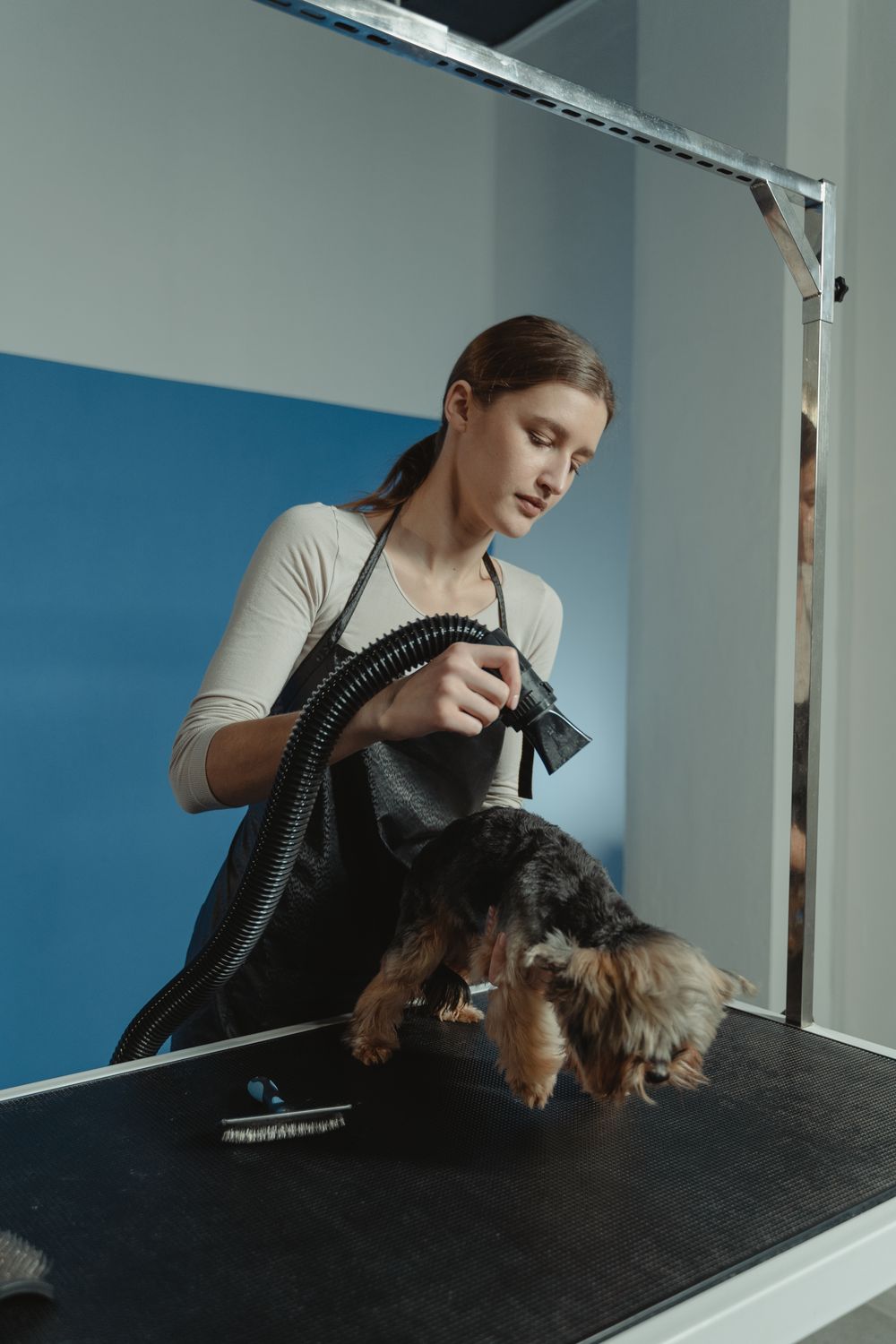
Why dog grooming results are hard to predict
Grooming before-and-after mismatches are one of the most common sources of friction between owners and groomers — and almost never because the groomer did poor work. The owner pictures one outcome in their head. The groomer interprets a verbal description, maybe paired with a reference photo of a different breed's coat. What comes out the door matches neither picture exactly.
The gap is communication, not skill. "Short and clean" on a Labradoodle looks nothing like "short and clean" applied to a Yorkshire Terrier. A rounded teddy bear face on a Poodle takes different scissor work than the same look on a Maltese, because the underlying coat texture and growth pattern aren't the same.
The global dog grooming market was valued at $1.5 billion in 2025 and is projected to grow at a CAGR of 6.1% through 2035, according to Custom Market Insights, and the dog segment led the broader pet grooming services market with an 83% revenue share in 2024, according to Grand View Research. As more dogs get groomed professionally on a regular schedule, the expectation gap between what an owner asks for and what a groomer delivers becomes one of the more common reasons a client doesn't rebook.
More detailed verbal instructions don't close that gap — a visual reference of the specific cut on the specific dog does.
Dog grooming transformations by coat type
Continuously growing coats (Poodles, Bichon Frises, Maltese, Shih Tzus, Goldendoodles)
These breeds produce the most dramatic before-and-afters because their coats never stop growing or shedding out on their own. Left ungroomed, the coat can run two to three times longer than its finished length — the "before" is often a shapeless fluff ball, and the "after" is the first time in months anyone can see the dog's actual face, body line, and proportions underneath it.
The cut you choose changes the personality of the result as much as the length does. A summer clip on a Shih Tzu reads nothing like a show coat on the same dog, and a Poodle in a puppy clip looks like a different animal than the same Poodle in a continental cut.
Double coats (Golden Retrievers, Huskies, German Shepherds, Corgis)
Double-coated breeds generally shouldn't be cut short — shaving through the undercoat can damage the coat's structure and its ability to insulate against heat and cold. The before-and-after here is about shape, tidiness, and shedding volume rather than length. A Golden Retriever after a professional de-shed and trim shows a cleaner outline, tidier feathering on the legs and ears, and noticeably less loose fur coming off the coat for days afterward.
The change is subtler than a continuously growing coat, but it's still visible — most obviously at the chest, behind the ears, around the tail, and along the "pants" on the rear legs.
Short single coats (Labrador Retrievers, Beagles, Boxers, Dalmatians)
Short-coated breeds show the least dramatic length change from a groom, because there isn't much length to change. The before-and-after for these dogs is about condition — skin health, coat shine, and hygiene — rather than silhouette. A bath, nail trim, ear cleaning, and blueberry facial produce a visibly cleaner dog, but the shape stays the same.
Wire coats (Wire Fox Terriers, Schnauzers, Border Terriers)
Wire coats change noticeably when hand-stripped or clipped correctly. A Schnauzer's boxy head, thick eyebrows, and beard are a defined breed look that only stays sharp with regular upkeep — skip it and the face looks overgrown and undefined within a few weeks. A proper groom brings the signature silhouette back into focus.
Dog grooming styles: what each cut looks like before and after
Puppy cut
An even, all-over short trim — face, legs, body, and tail cut to roughly the same length. The before is usually longer and uneven; the after is clean and uniform. It's one of the most requested cuts because it's low-maintenance between appointments, and on most breeds it reveals the dog's face more clearly than a longer style would.
Teddy bear cut
Body coat kept short, face left round and full, ears shaped to blend into the rounded head. The before-and-after difference shows up almost entirely at the face: shaggy and overgrown becomes soft, round, and toy-like. Common on Goldendoodles, Bichon Frises, Shih Tzus, and Pomeranians.
Kennel cut
A close, practical trim built for easy upkeep and comfort in warm weather — shorter than a puppy cut. The before-and-after shows a real drop in visible volume; a dog that looked big and fluffy can come out noticeably smaller and leaner. Great for summer, but worth flagging to owners in advance so a thinner-looking dog isn't a surprise.
Breed-specific cuts
Cuts built to the historical or show standard for a particular breed — a Schnauzer's beard and eyebrows, a Cocker Spaniel's ear feathering, a Poodle's continental clip. These take more skill than a standard all-over trim, and the before-and-after tends to be the most dramatic of any category when it's done well.
The Makeover Breed Grooming Result Guide
A framework for predicting what your specific breed's before-and-after will look like before you book.
| Breed type | Coat behavior | Most dramatic cut for before/after | Maintenance frequency |
|---|---|---|---|
| Poodle (all sizes) | Continuously growing, curly | Continental clip, teddy bear, puppy cut | Every 4–6 weeks |
| Goldendoodle / Labradoodle | Continuously growing, wavy or curly | Teddy bear, puppy cut, summer clip | Every 6–8 weeks |
| Shih Tzu | Continuously growing, silky | Puppy cut, top knot style, show coat | Every 6–8 weeks |
| Cocker Spaniel | Medium-long, feathered | Breed-specific with feathering | Every 6–8 weeks |
| Schnauzer | Wire coat | Breed-specific with boxy beard/eyebrows | Every 6–8 weeks |
| Bichon Frise | Continuously growing, fluffy | Rounded teddy bear | Every 4–6 weeks |
| Golden Retriever | Double coat | De-shed and trim | Every 8–12 weeks |
| Husky / Malamute | Double coat (no shaving) | De-shed only | Every 8–12 weeks |
| Yorkshire Terrier | Continuously growing, silky | Puppy cut, long show coat | Every 4–6 weeks |
Use this table to set expectations before you book, then preview the actual result on your dog's own photo before you confirm the appointment.
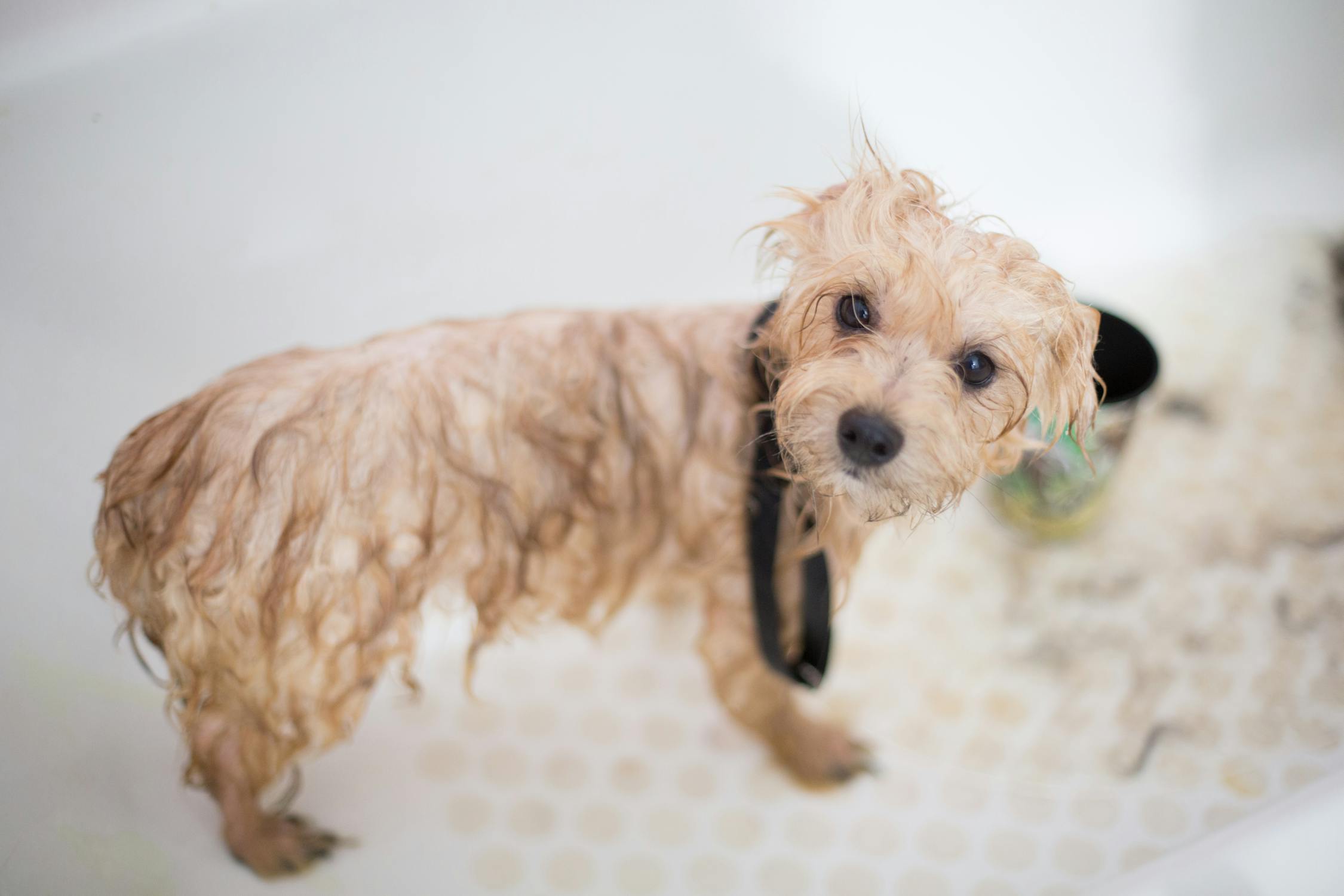
Most dramatic dog grooming before and after transformations
Severely matted coat to clean trim
The single most visually dramatic transformation is a severely matted dog getting a full groom. When mats sit too close to the skin to brush out safely, a close shave is the only humane option. The before is a mass of tangled, uncomfortable fur; the after is often unrecognizable — smaller, lighter, and visibly more comfortable.
Overgrown Goldendoodle to teddy bear cut
Months without a groom and a Goldendoodle's coat turns into one shapeless mass — head, body, legs, and tail blending together. A teddy bear cut brings the face back into focus, gives the body a defined shape, and cleans up the legs. Owners routinely describe it as their dog looking like a puppy again.
Long-coated Shih Tzu to summer puppy cut
A full-length Shih Tzu show coat is striking but demanding to maintain. Many owners switch to a short puppy cut for warmer months. The before is floor-length and flowing; the after is a short, close layer that makes the dog's face, eyes, and expressions far more visible.
Ungroomed Schnauzer to breed-specific cut
Skip enough appointments and a Schnauzer loses its signature look entirely — the boxy beard, the sharp eyebrows, the clean body lines. A breed-specific groom brings that silhouette back. It's one of the most recognizable transformations in the breed world precisely because the standard is so specific and the neglected state is so different from it.
How groomers use previews to align with owners
For a professional groomer, showing the owner a preview of the proposed cut on their own dog is the single most effective consultation tool available.
When an owner says "I want a teddy bear cut," they might be picturing a result from a different breed, a different coat texture, or a different length than what the groomer has in mind. A preview closes that gap before a single scissor cut happens — the owner sees a photorealistic result on their own dog's photo and either confirms it's what they want or asks for an adjustment.
North America holds the largest regional share of the global pet grooming services market, at roughly 40%, and 45.5% of American households own at least one dog, according to Grand View Research. At that scale of demand, groomers who cut down on post-service revisions and complaints have a real edge over ones who don't.
If you run a grooming business and want to add previews to your consultation process, share your details with Makeover to discuss a custom-built preview tool for your business.
How to preview your dog's groom before the appointment
A handful of forward-thinking grooming businesses now offer AI-generated previews so owners can see a realistic version of the finished cut before they ever book.
Step 1: Take a clear side or front photo of your dog. Natural light works best — avoid shadows that hide the coat's actual texture and length.
Step 2: Ask your groomer if they offer an AI preview tool. A growing number of grooming businesses use custom-built software for this during booking or consultation.
Step 3: Pick a coat transformation direction. Short trim, teddy bear, or breed-specific — whatever you're actually considering.
Step 4: Review your result. The tool generates a photorealistic preview of your dog's coat after the groom.
Step 5: Bring it to your appointment. Share the preview with your groomer as a visual brief. They'll know exactly what you want before any grooming starts.
If your groomer doesn't offer this yet, grooming businesses interested in adding an AI preview tool for clients can reach out to Makeover to discuss a custom-built solution.