Medical disclaimer: This article is for informational purposes only, does not constitute medical advice, and has not been reviewed by a licensed medical professional. Results vary by individual. Always consult a qualified healthcare provider before making any healthcare decisions.
Quick answer: All-on-4 dental implants replace a full arch of missing or failing teeth using just four strategically placed implants. Before treatment, patients typically have severe decay, bone loss, or loose dentures. After healing — which takes 3 to 6 months — the result is a fixed, natural-looking smile, with the prosthetic bridge itself showing a 98.8% survival rate at 10 years in Maló Clinic longitudinal data.
What are All-on-4 dental implants? All-on-4 is a full-arch tooth replacement technique that anchors a complete prosthetic bridge onto just four titanium implants per jaw. Unlike traditional implants, two rear implants are placed at an angle to maximise contact with available bone — removing the need for bone grafts in most cases.
This guide draws on published longitudinal survival data, 2026 cost research, and patient outcome studies to give you a clear, honest picture of what All-on-4 results look like before and after treatment.
What does your mouth look like before All-on-4?
Most patients considering All-on-4 arrive with one or more of these situations:
- Multiple missing teeth with visible gaps
- Severely decayed or cracked teeth that cannot be saved
- Loose or painful traditional dentures that shift when eating
- Significant jawbone loss from years of tooth absence
- Chronic pain or infection from failing dental work
The common thread is function and confidence. Patients often avoid social situations, modify their diet to soft foods only, and struggle with the daily reality of removable dentures. According to the American College of Prosthodontists, about 178 million Americans are missing at least one tooth — and for many of them, All-on-4 represents a permanent solution rather than a patch.
What does All-on-4 look like after treatment?
After All-on-4, your mouth doesn't look like a repaired version of the old problem — it looks like a different mouth. The change is both structural and cosmetic.
Patients typically leave treatment with:
- A full arch of fixed, natural-looking teeth that do not remove at night
- Restored bite strength that allows them to eat foods avoided for years
- Improved facial structure, since implants preserve the jawbone that dentures allow to resorb
- Clearer speech — loose dentures can cause slurring, fixed implants do not move
- A smile that looks and feels like natural teeth
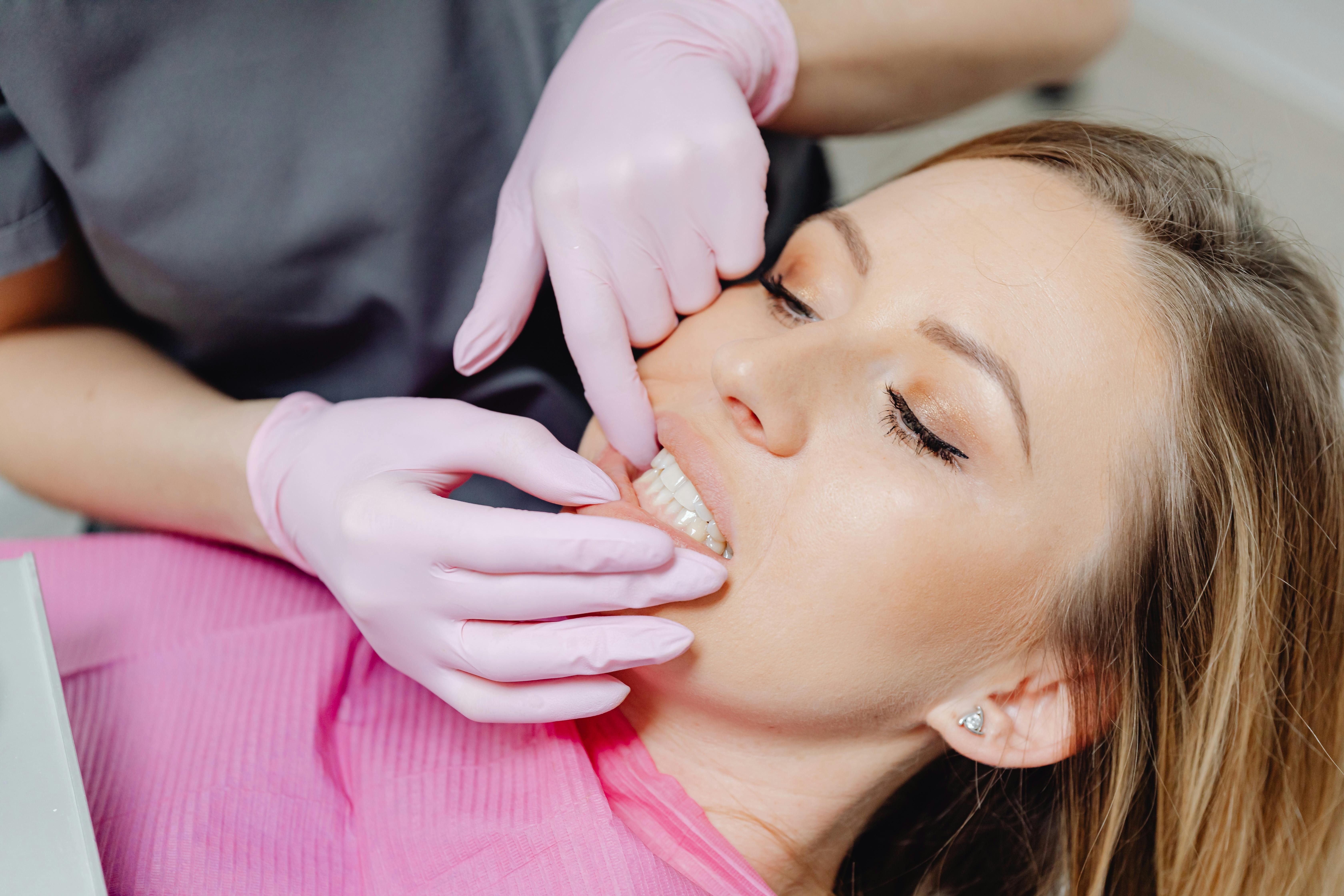
The visual change between before and after photos is dramatic. Sunken cheeks caused by bone loss begin to fill out. Gaps close. Stained or decayed teeth are replaced with bright, well-proportioned prosthetics. Many patients describe it as getting their face back.
The prosthetic teeth aren't off-the-shelf. Your dentist uses digital smile design or physical impressions to map tooth size, shape, and shade against your own facial proportions before the bridge is fabricated — which is why two patients with the same procedure end up with visibly different, individually-fitted smiles.
How long does it take to see All-on-4 results?
You do not wait months to leave the clinic with teeth. Here is the typical sequence:
Day of surgery: The implants are placed and a temporary prosthetic bridge is fitted the same day. You walk out with a functional smile.
Weeks 1–4: Soft food diet, healing and swelling management. The temporary bridge is in place.
Months 1–3: Osseointegration — the implants fuse with the jawbone. This is when the structural stability of your final result is built.
Months 3–6: Final impression, fabrication, and fitting of your permanent bridge. This is your finished before-and-after transformation.
The total timeline from first consultation to final result is typically 4 to 9 months. The surgical portion itself takes 2 to 4 hours per arch.
How successful are All-on-4 dental implants?
The long-term data is strong.
Based on longitudinal research from the Maló Clinic group — the practice that pioneered the All-on-4 technique — here are the survival rates:
| Timeframe | Lower jaw (mandible) | Upper jaw (maxilla) |
|---|---|---|
| 10 years | 97–98% | 95–97% |
| 15 years | 95–96% | 94–95% |
| 20 years | 90%+ | 90%+ |
The prosthetic bridge survival rate at 10 years is 98.8%, based on the Maló Clinic longitudinal dataset (Maló et al., Clinical Implant Dentistry and Related Research, 2019), meaning the fixed teeth themselves hold up as well as the implants.
Two factors reduce success rates most significantly: smoking (impairs blood supply and increases peri-implantitis risk) and uncontrolled diabetes (compromises bone metabolism). Patients who manage these factors show outcomes comparable to the general population.
The bridge material also affects longevity. Acrylic bridges last 7–10 years before replacement is typically needed. Zirconia bridges last 15–20+ years with superior wear resistance.
How much do All-on-4 dental implants cost?
Cost is one of the most common questions — and one of the biggest barriers. Here is an honest breakdown.
| Location | Cost per arch | Full mouth (both arches) |
|---|---|---|
| United States | $15,000–$38,000 | $25,000–$70,000+ |
| United Kingdom | £12,000–£28,000 | £20,000–£55,000+ |
| Mexico / Turkey (dental tourism) | $3,000–$7,000 | $6,000–$14,000 |
Source: Full Smile Makeover Preview Tool
The main drivers of cost variation are:
- Prosthetic material — zirconia costs more upfront but lasts roughly twice as long as acrylic
- Implant brand — premium brands (Nobel Biocare, Straumann) add cost
- Surgical complexity — bone grafting adds cost if required
- Geographic location — major metro areas price higher than regional practices
Most dental insurance plans do not cover implants, though many clinics offer financing. Approximately 3 million Americans receive dental implants annually (American Academy of Implant Dentistry), and the global dental implants market is projected to grow from $12.57 billion in 2025 to $18.79 billion by 2030 (MarketsandMarkets, 2025) — which means more providers, more competition, and gradually improving access.
Can you preview your smile before treatment?
This is where most patients run into a frustrating wall.
Your dentist can describe what your result might look like. They can show you generic stock photos of "typical outcomes." But they cannot show you — on your own face — what your specific smile will look like after treatment.
That gap is exactly what Makeover solves for dental practices.
Makeover builds AI-powered smile design software that generates a photorealistic before-and-after preview of a patient's dental result in under 10 seconds. A practice using it uploads the patient's photo, selects the transformation type (in this case, full-arch implants or smile design), and shows a side-by-side image of the potential outcome during the consultation.
For patients weighing a $20,000+ procedure, this matters. Seeing your result on your own face — before any appointment — is a completely different experience from looking at someone else's photos. Ask your dental practice whether they offer an AI smile preview.
If you run a dental practice and want to offer this to patients, share your details with Makeover and our team will scope a custom smile preview tool for you.
All-on-4 vs. traditional dentures: how do they compare?
Patients often arrive having lived with dentures for years. Here is how the two options compare honestly.
| Factor | All-on-4 Implants | Traditional Dentures |
|---|---|---|
| Fixedness | Permanent, non-removable | Removable, can shift |
| Bone preservation | Yes — implants stimulate bone | No — bone continues to resorb |
| Bite strength | 70–80% of natural bite | 20–25% of natural bite |
| Maintenance | Brush like natural teeth | Remove and soak nightly |
| Lifespan | 20+ years (implants) | 5–10 years before refit/replacement |
| Upfront cost | $15,000–$38,000/arch | $1,500–$5,000/arch |
| Long-term cost | Lower (less replacement) | Higher (recurring adjustments and replacements) |
The upfront cost of All-on-4 is higher. The long-term cost picture is often more competitive when you factor in repeated denture adjustments, relines, and replacements over a decade.
Who is a good candidate for All-on-4?
All-on-4 works well for most adults with missing or failing teeth, but a few factors affect outcomes.
Strong candidates:
- Adults with multiple missing teeth, advanced decay, or failing restorations
- Patients with some degree of bone loss (the angled rear implants compensate)
- Non-smokers or patients willing to stop smoking before surgery
- Patients with well-controlled or no systemic conditions
Higher-risk factors to discuss with your dentist:
- Active smoking — significantly increases peri-implantitis risk
- Uncontrolled diabetes — slows healing and affects bone integration
- Very severe bone loss — may require augmentation before implant placement
- Certain medications (bisphosphonates, immunosuppressants) that affect bone metabolism
The best way to determine candidacy is a 3D CBCT scan, which maps your bone volume and density precisely. Most All-on-4 clinics offer this as part of the initial consultation.
The Makeover Smile Readiness Scorecard
Based on the factors that most predict a successful All-on-4 outcome, we developed this quick self-assessment. It is not a clinical diagnosis — use it as a starting point for your consultation conversation.
| Factor | Green (favourable) | Amber (discuss with dentist) | Red (address first) |
|---|---|---|---|
| Smoking status | Non-smoker | Occasional smoker | Daily smoker |
| Bone density | Adequate on scan | Some loss, borderline | Severe resorption |
| Systemic health | No relevant conditions | Controlled diabetes/BP | Uncontrolled conditions |
| Gum health | No active disease | Mild gum inflammation | Active gum infection |
| Commitment to hygiene | Daily brushing/flossing | Inconsistent | Minimal oral hygiene |
| Expectation timeline | Understands 3–6 months | Some urgency | Expects instant permanent result |
If most of your answers fall in the green column, you are likely a strong candidate. Amber factors are manageable. Red factors need to be resolved before implant placement to protect your investment and outcome.
The bottom line
All-on-4 dental implants deliver one of the most dramatic before-and-after transformations in modern dentistry. With a 98.8% 10-year prosthetic survival rate and same-day tooth placement, the procedure combines speed with long-term reliability. The upfront cost is significant — typically $15,000 to $38,000 per arch in the US — but it compares favourably to a decade of denture replacements and adjustments. The gap most patients feel is not about the procedure itself. It is about not being able to see their result before committing. That is what we built Makeover to solve.
Want to see your smile before treatment? Ask your dental practice whether they offer an AI smile preview. If you run a dental practice, share your details with Makeover to get one built for your patients.