Quick answer: The best room makeover ideas for 2026 include repainting walls, updating lighting, swapping textiles, adding plants, and upgrading key furniture pieces. Budget makeovers start under $500. Mid-range refreshes run $3,000 to $8,000. The smartest move is to visualize the finished result before spending anything.
What is a room makeover? A room makeover is a planned update to the look and feel of a room. It ranges from a simple refresh involving new paint and accessories to a full renovation with new flooring, furniture, and layout. The goal is to improve how the space looks, feels, and functions.
This guide draws on home improvement industry data and spending research from the Harvard Joint Center for Housing Studies, along with the process discipline designers use to preview a room transformation before a client commits budget to it.
Why Room Makeovers Matter in 2026
Remote work and hybrid schedules mean more of us live, work, and relax in the same handful of rooms than we did a decade ago. That shift raises the stakes on how those rooms actually feel. Environmental psychology research consistently links physical surroundings to mood, focus, and sleep quality — a room that looks tired doesn't just look wrong, it functions worse.
US homeowners spent over $472 billion on home improvements and repairs in 2022, according to the Harvard Joint Center for Housing Studies. Interior refresh projects, from painting to new furniture, make up a large share of that spending.
The most common reason people delay a room makeover isn't budget — it's uncertainty. They can't picture how a new color or furniture arrangement will actually look in their specific space, with their specific light and their specific ceiling height. That gap between imagination and reality is where most renovation projects stall before they start.
Room Makeover Ideas by Space
Living Room Makeover Ideas
The living room is the most-used room in most homes. Small changes here make the biggest daily difference.
Repaint in a warm neutral. Greiges, warm whites, and terracotta-adjacent shades are replacing cool grays. A single wall color change transforms the energy of the room. Cost: $150 to $400.
Layer your lighting. Replace a single overhead fixture with three sources: ambient (ceiling), task (floor lamp), and accent (table lamp or sconce). Layered lighting makes any room feel designed rather than default.
Anchor with a rug. A large area rug that defines the seating area makes a living room feel intentional. The most common mistake is choosing a rug that is too small. It should sit under the front legs of all major furniture pieces.
Swap out cushions and throw blankets. New textiles in current colors and textures update the room without moving a single piece of furniture. Budget $100 to $300 for a meaningful refresh.
Add a statement piece. A new coffee table, a piece of art, or a bold accent chair becomes the visual anchor of the room. One strong piece beats five generic ones.
Bedroom Makeover Ideas
The bedroom is the most personal room in the house. Makeovers here prioritize comfort and calm.
Invest in bedding. The quality and color of bedding defines the entire room. High-thread-count linen or cotton in a neutral tone with layered pillows elevates the space immediately.
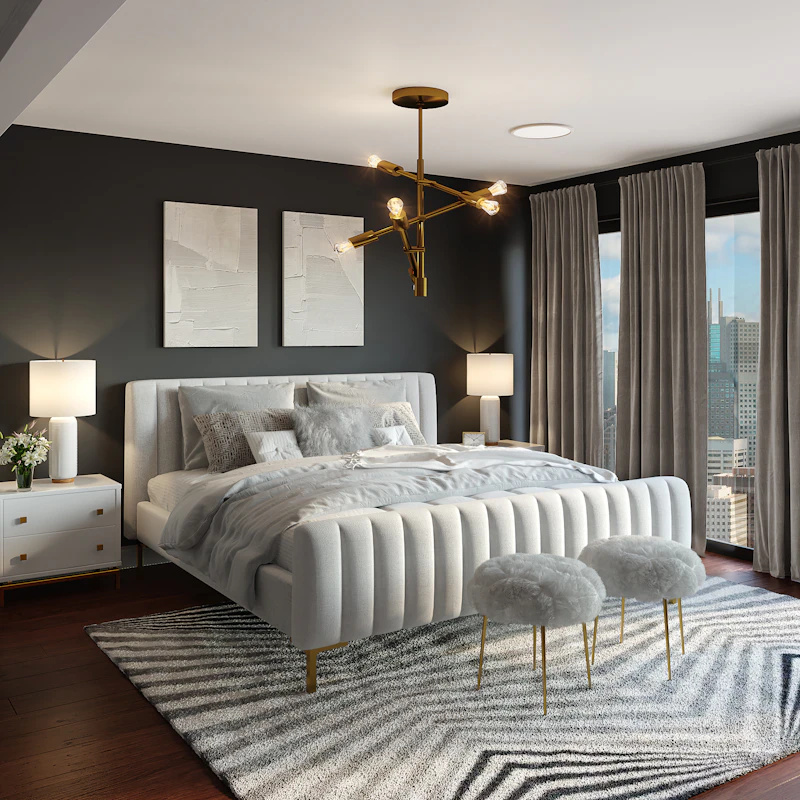
Create a headboard moment. A painted accent wall behind the bed, an upholstered headboard, or a built-in shelf unit behind the bed gives the room a clear focal point.
Reduce visual noise. Bedrooms with less visual clutter feel more restful. Replace open shelving with closed storage. Clear the top of your dresser down to 3 to 5 intentional objects.
Improve window treatments. Blackout curtains hung from ceiling to floor make a bedroom feel larger and sleep better. Hang the rod 4 to 6 inches above the window frame for maximum effect.
Home Office Makeover Ideas
A well-designed home office increases focus, signals professionalism on video calls, and makes the hours spent there more productive.
Build a feature wall behind your desk. A painted accent wall, a gallery of framed prints, or a large bookshelf behind your desk creates a professional background and anchors the room.
Upgrade your desk and chair. Ergonomic furniture reduces fatigue and makes you more productive. A standing desk with a quality chair is the highest-return investment in a home office.
Add a plant. A single large plant in the corner of a home office adds life to the space and improves air quality. Snake plants and pothos are low-maintenance options.
Budget Room Makeover Ideas Under $1,500
You do not need a large budget to transform a room. These five changes cost under $1,500 combined and deliver visible results:
- Fresh paint ($100 to $300): Choose one bold color for an accent wall or repaint the whole room in a warm neutral.
- New area rug ($150 to $500): Size up from your current rug if possible. It is the most transformative single purchase in most rooms.
- Layered lighting ($100 to $300): Add one floor lamp and one table lamp. Replace any builder-grade overhead fixtures.
- New cushions and textiles ($100 to $250): Update throw pillows, a throw blanket, and curtains in a coordinating palette.
- Statement accessories ($100 to $200): A new mirror, a piece of art, or a set of curated objects on a shelf.
Total spend: $550 to $1,550. Visual impact: significant.
Room Makeover Ideas for Small Spaces
Small rooms have one advantage: each change registers faster. The principles for small-space makeovers are consistent:
Go lighter on walls. Pale colors push walls back visually. A small room painted in a warm white reads noticeably larger and airier than the same room painted in a dark, saturated tone.
Use mirrors strategically. A large mirror on the wall opposite a window bounces natural light deeper into the room and makes it feel more open. This is the oldest trick in interior design and it still works.
Choose furniture with legs. Sofas and chairs that show the floor beneath them make a room feel less crowded. Avoid heavy, floor-to-ceiling upholstered furniture in small spaces.
Mount things on walls. Floating shelves, wall-mounted TVs, and wall-mounted bedside tables free up floor space. Clear floor space is what makes a small room feel large.
Edit ruthlessly. Remove everything from the room that does not need to be there. A well-edited room with fewer, better things always feels better than a cluttered room with more things.
2026 Room Makeover Trends
Several clear trends are shaping room makeovers in 2026:
Warm earthy palettes. Clay, terracotta, warm white, and sand are replacing the cool grays that dominated the 2015 to 2022 period. Homes in 2026 feel warmer and more grounded.
Biophilic design. Natural materials, indoor plants, organic shapes, and natural light are central to 2026 interior design. Rattan, jute, wood, linen, and stone are the materials of the moment.
Layered maximalism. After years of minimalism, maximalism is returning. More pattern, more color, more texture. The key is intentionality: everything in the room is chosen, not accumulated.
Multifunctional spaces. As homes continue to serve as offices, gyms, and studios, furniture that adapts to multiple uses is growing in demand. Fold-away desks, storage ottomans, and convertible sofas are practical necessities.
Quieter technology. Smart home technology is being embedded rather than displayed. Speakers are hidden, wires are managed, and screens fold away. The room should feel human, not digital.
The Makeover Room Reset Scorecard
Use this scorecard before starting any room makeover. It helps you identify where your room loses the most points and where to focus your budget.
| Element | Question to Ask | Score (1 = Poor, 5 = Excellent) |
|---|---|---|
| Lighting | Does the room have 3 light sources? | 1 to 5 |
| Color | Does the palette feel intentional and cohesive? | 1 to 5 |
| Furniture Scale | Do furniture pieces fit the room without crowding it? | 1 to 5 |
| Textiles | Do rugs, cushions, and curtains coordinate? | 1 to 5 |
| Storage | Is clutter hidden or minimized? | 1 to 5 |
| Focal Point | Is there one clear feature the eye is drawn to? | 1 to 5 |
| Personal Touches | Does the room reflect the person living in it? | 1 to 5 |
How to use this scorecard: Score each element honestly, then spend your budget on the lowest scores first. A room that scores 3 or below on lighting and color needs those fixes before any furniture purchase will make a visible difference — new furniture in a badly lit, poorly colored room still looks wrong.
How to See Your Room Makeover Before You Start
The traditional process for a room makeover involves choosing paint colors from a 2-inch chip, scrolling through Pinterest, and hoping everything comes together. Most of the time, something looks different in context than it did in the store.
We built Makeover to solve that problem for interior designers and renovation businesses. Here is how the preview process works once a designer has it in their toolkit:
- Take a clear photo of the current room.
- The designer generates the preview using their Makeover-built tool.
- Select a design style: modern, Scandinavian, earthy, maximalist, or custom.
- Review a photorealistic preview in under 30 seconds.
- Adjust the style, try alternatives, and decide with confidence.
Interior designers who show clients a preview before pitching tend to close proposals faster, simply because there's nothing left to imagine — the client is reacting to their actual room, not a mood board. Homeowners working with a designer benefit from the same clarity: fewer revisions, fewer surprises, and a lot more confidence in the final call.
If you run an interior design or renovation business and want to offer this kind of preview to your own clients, talk to our team about building it into your consultation process. For related transformation content, see our guides on bathroom renovation ideas and kitchen remodel before and after.