Medical disclaimer: This article is for informational purposes only, does not constitute medical advice, and has not been reviewed by a licensed medical professional. Results vary by individual. Always consult a qualified healthcare provider before making any healthcare decisions.
Quick answer: Botox before and after results vary by treatment area. Most patients see softened lines and relaxed facial muscles within 3 to 5 days, with peak results at day 14. Natural-looking results preserve some movement. Over-treatment creates a frozen appearance. Results last 3 to 4 months on average.
What is botox before and after? Botox before and after refers to the visual transformation a patient experiences from a botulinum toxin injection treatment. It describes the change in appearance from the pre-treatment baseline to the peak-result state, typically measured at 14 days post-injection. The term covers both the physical softening of dynamic wrinkles and the shift in facial expression and resting appearance.
This guide draws on published clinical trial data, ISAPS and ASPS 2024 procedural statistics, and research into the visual outcomes of botox across the most common treatment areas.
How popular is botox in 2026?
Botox is the most performed non-surgical cosmetic treatment in the world. According to the American Society of Plastic Surgeons (ASPS) 2024 Statistics Report, neuromodulator treatments increased 4% year over year, with 9,883,711 treatments performed in the US alone in 2024. The ISAPS 2024 Global Survey recorded 7.8 million botulinum toxin procedures worldwide, making it the single most common non-surgical treatment for both men and women across every age group.
The global botulinum toxin market reached USD 12.67 billion in 2026, and demand keeps climbing as minimally invasive treatments replace surgical ones. Patients aged 35 to 50 account for 47% of all botulinum toxin procedures, though a growing share of younger patients now start earlier, as a preventive step rather than a correction.
Yet with millions of treatments happening every year, most first-time patients still can't picture what their own face will look like afterward. Photos of other people's results don't answer that question — this guide does.
What does botox before and after look like?
Done well, a botox transformation should make people ask if you slept better, not whether you had work done. Lines that used to form when you frowned or raised your brows soften. Your skin sits smoother at rest. When you laugh or react, the movement is still there — just gentler.
That subtlety is exactly what separates a good result from an over-treated one. The goal is reduction, not elimination of movement. Most experienced injectors preserve 20 to 30% of natural muscle activity on purpose, so the face keeps its expression.
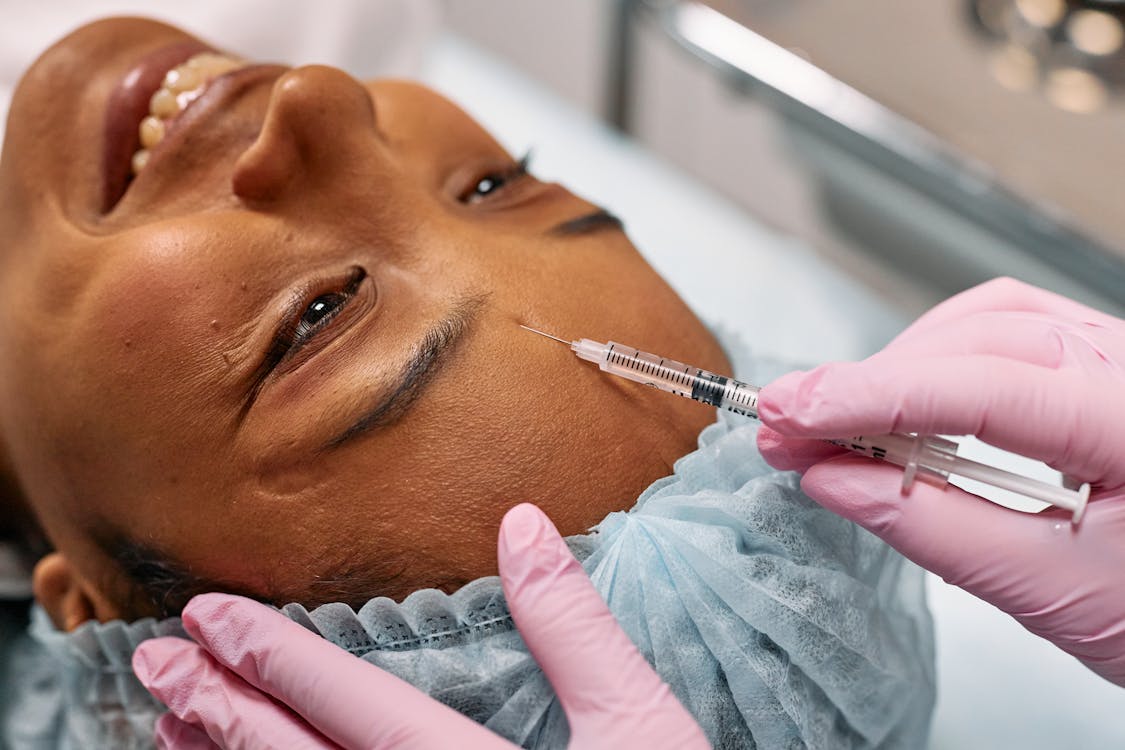
Immediately after treatment: small raised bumps appear at each injection point and flatten within 30 to 60 minutes. Mild redness is normal and fades quickly. Most patients go straight back to work or errands — nobody clocks it as "just had botox." Bruising is possible but uncommon. For the first 4 hours, skip lying flat, touching the treated area, or exercising.
The before-and-after contrast is most visible in high-movement areas:
- Forehead horizontal lines
- Glabella (the vertical frown lines between the brows, often called the "11s")
- Lateral canthal lines (crow's feet)
- Bunny lines (on either side of the nose bridge)
- Lip lines and lip flip
- Neck bands (platysmal bands)
Each of these areas responds differently to treatment. Results depend on line depth, muscle strength, age, and the number of units injected.
Botox before and after by treatment area
Forehead lines
Before treatment, horizontal forehead lines form when you raise your brows. Deep lines may be visible at rest in older skin or in those with strong frontalis muscles.
After treatment with 10 to 20 units, the lines soften noticeably. Shallow lines often disappear at rest. Deep lines become less prominent and rarely form fully even with expression. Brow position is maintained because a skilled injector avoids over-treating the frontalis, which can cause brow ptosis (drooping).
What to expect: smooth skin at rest, softened lines during expression. Full movement does not return, but natural expression remains.
Frown lines (glabella / "11s")
The glabella is the area between the eyebrows. Repeated frowning creates two vertical creases known as the "11 lines" or frown lines. These are often the first area patients request treatment for, as deep frown lines can make a rested face appear angry or tired.
Before treatment: vertical creases visible during frowning. In patients with long-term habits, static lines (visible even at rest) may have developed.
After treatment with 20 to 25 units: the corrugator and procerus muscles are fully relaxed. Clinical studies from Allergan show that 80% of adults had significant physician-assessed improvement in glabella lines at day 30. The 11s soften dramatically. Static lines reduce over time with repeated treatments.
Crow's feet
Crow's feet are the fan-shaped lines at the outer corners of the eyes. They form from smiling and squinting. Many patients notice them earlier than other lines because the skin around the eye is thinner.
After treatment with 10 to 15 units per side: the orbicularis oculi muscle relaxes, reducing the depth and spread of crow's feet. A clinical study published via Allergan found that 67.9% of patients had mild or no crow's feet lines at day 30 after treatment. The eye area appears more open and rested. A slight brow lift effect is also common.
Bunny lines
Bunny lines are the short diagonal creases that appear on either side of the upper nose bridge when you scrunch your nose or laugh. They are a secondary effect of treating the forehead and glabella without addressing the nasalis muscle.
Before: lines are only visible during expression. After 5 to 10 units: the scrunching motion is reduced, lines do not form. Treatment here is often added to forehead packages rather than requested solo.
Lip flip
The lip flip uses 4 to 6 units of botox along the upper lip's border to relax the orbicularis oris muscle. This causes the upper lip to roll slightly outward, giving the appearance of more lip volume without adding filler.
Before: upper lip may roll inward, especially visible when smiling. After: upper lip appears fuller, more defined, and stays slightly everted during smiles. It is not a substitute for lip filler, but it complements it.
Brow lift
Strategic injection above the lateral brow relaxes the depressor muscles that pull the brow down. This causes a subtle elevation of the brow tail, creating a more lifted, open-eyed look.
Before: brow tail sits flat or slightly descended. After 2 to 4 units: brow tail lifts 1 to 3 mm. The effect opens the eye and softens a tired or heavy upper lid appearance. Results are subtle but highly appreciated by patients who are not ready for a surgical brow lift.
Neck bands (platysma)
Platysmal bands are the vertical cords that become visible on the neck with age as the platysma muscle separates. Botox injections relax these bands for a smoother neck profile, often called the "Nefertiti lift."
Before: vertical cords visible during neck movement or expression, and at rest in more advanced cases. After 25 to 50 units distributed across the bands: the cords relax, the jawline appears more defined, and the neck looks smoother. Results here last slightly shorter than facial treatments, typically 2 to 3 months.
What makes a natural botox result?
The difference between a natural and an over-treated result comes down to three things: unit count, injection placement, and the injector's understanding of facial anatomy.
Natural results:
- Lines soften but do not disappear entirely
- Brows remain in a natural position
- The face retains full emotional range (surprise, laughter, concern)
- Skin appears smoother at rest
- No puffiness or heaviness around the brow or upper lid
Signs of over-treatment:
- Forehead is completely flat with no movement
- Brows are heavy or drooping (brow ptosis) due to over-injecting the frontalis
- The face looks waxy, expressionless, or frozen
- Smile feels stiff or upper lip does not move naturally
- Spock brow (over-elevated outer brow arch) from uneven glabella treatment
Over-treatment almost always comes down to too many units placed in the wrong pattern, not a flaw in botox itself. It isn't permanent — as the toxin metabolizes over 3 to 4 months, expression gradually returns. But you shouldn't have to wait it out. The fix is choosing a provider whose before-and-after work matches your age group and treatment area, not just anyone with an injector license.
The Makeover Treatment Area Outcome Scorecard
Based on clinical data and patient-reported outcomes, the following scorecard gives an honest picture of expected before-and-after results by treatment area. Use it to set realistic expectations before your consultation.
| Treatment Area | Typical Units | Days to Full Result | Visual Change at Rest | Natural Movement Preserved | Duration |
|---|---|---|---|---|---|
| Forehead lines | 10–20 | 10–14 days | High — lines soften significantly | Moderate (20–30%) | 3–4 months |
| Frown lines (11s) | 20–25 | 10–14 days | Very High — 80% see significant improvement | Low (10–20%) | 3–4 months |
| Crow's feet | 10–15/side | 7–10 days | High — 67.9% see mild or no lines | Moderate | 3–4 months |
| Bunny lines | 5–10 | 7–10 days | Moderate — visible only during scrunching | High | 3 months |
| Lip flip | 4–6 | 5–7 days | Low at rest, visible during smiling | High | 2–3 months |
| Brow lift | 2–4 | 7–10 days | Subtle (1–3mm lift) | High | 3–4 months |
| Neck bands | 25–50 | 10–14 days | Moderate — cords relax, jawline defined | Moderate | 2–3 months |
The Makeover Treatment Area Outcome Scorecard — developed from published clinical trial data and patient outcome studies to help patients and practitioners align on realistic results before treatment.
How age and skin type affect your results
Patients in their 20s and early 30s
Botox at this stage is largely preventive. Lines are dynamic (they only appear during expression) and skin is elastic. Results are dramatic because there are few static lines to address. Treatment maintains a fresh baseline and may slow the formation of permanent lines over time.
Patients in their late 30s and 40s
This is the most common age group for treatment, representing 47% of all global botox procedures. Dynamic wrinkles are well-established and some static lines may have formed. Botox produces strong visible improvement — lines soften significantly at rest and disappear during expression. Multiple sessions often begin to erase lighter static lines as muscles weaken over time.
Patients in their 50s and beyond
Skin laxity and static lines are more prominent. Botox still delivers real improvement, particularly in the glabella and crow's feet areas, but results in the forehead may be more modest if lines are deeply etched. Combination treatments (botox plus filler or skin resurfacing) often produce better overall results for this group.
Skin type and texture
Oily, thicker skin tends to show less visible change than thinner skin. Thin skin shows the smoothing effect more dramatically but also shows any uneven placement more noticeably. Sun-damaged skin may have static lines that do not respond to botox alone, as these are structural changes to the dermis rather than muscle-driven.
Botox before and after: units and cost guide
Understanding unit counts helps you evaluate quotes and avoid under- or over-dosing.
| Treatment Area | Typical Units | Typical Cost (USD) |
|---|---|---|
| Forehead only | 10–20 units | $100–$200 |
| Glabella (11s) only | 20–25 units | $200–$250 |
| Crow's feet (both sides) | 20–30 units | $200–$300 |
| Standard 3-area package | 50–65 units | $400–$650 |
| Lip flip | 4–6 units | $40–$60 |
| Brow lift | 2–4 units | $20–$40 |
| Neck bands | 25–50 units | $250–$500 |
Cost per unit ranges from $10 to $25 depending on provider type, location, and brand. Board-certified dermatologists and plastic surgeons typically charge on the higher end, while nurse injectors at med spas may charge less. Price should not be your primary deciding factor. Placement accuracy matters more than brand or base cost.
For reference on neuromodulator alternatives (Dysport, Xeomin, Daxxify), the choice of brand may affect unit-to-unit equivalency but rarely changes the visual outcome when dosed correctly.
How to preview your botox results before treatment
The biggest barrier to booking a first botox treatment usually isn't cost or fear of needles — it's not knowing what the result will look like on your own face. Generic before-and-after galleries don't solve that. They show someone else's forehead, someone else's frown lines, someone else's outcome.
That's the gap our botox preview tool closes. During a consultation, the clinic uploads your photo, selects the treatment area, and generates a photorealistic preview of your result in under 10 seconds — on your actual face, not a stock model. You see how your forehead, glabella, or crow's feet would look at peak result before a single unit is injected, which makes the decision to move forward far less of a leap of faith.
For more on how clinics build this into their consultation flow, see our guide to botox AI preview for clinics.
Choosing the right provider for natural results
A great botox result comes down to who injects, not just how many units go in. Here's what to check before you book:
Experience and credentials: Look for a board-certified dermatologist, plastic surgeon, or a licensed nurse injector with advanced aesthetics training. Ask specifically how many botox treatments they perform per month. High-volume injectors tend to develop more precise placement instincts.
Before-and-after gallery quality: Request photos of patients similar to your age, skin type, and treatment area. Look for results that show natural expression in the after photos, not just frozen smoothness.
Willingness to under-treat first: The best injectors often start conservatively and offer a two-week follow-up to add units if needed. This approach avoids over-treatment on a first visit.
Consultation process: A good provider assesses your face at rest and in motion before deciding on placement. They should explain where each injection goes and why, not just ask how many areas you want treated.
For information on what to expect from aesthetic facial treatments more broadly, see our facelift before and after guide and laser resurfacing before and after.
For med spas and clinics: turn "let me think about it" into a booking
Every injector has heard it: the patient nods through the consultation, likes what they hear, then leaves to "think about it" — and never rebooks. Most of the time, that hesitation isn't about price. It's that they still can't picture the outcome on their own face.
Makeover's botox preview tool closes that gap at the point of decision. Your front desk or injector takes a consultation photo, generates a photorealistic preview by treatment area, and puts it in front of the patient before they leave the room — no separate app, no waiting on a designer. Every clinic's setup is different, so implementation is scoped to your intake flow and data-handling requirements, not sold off a shelf. If you want to see it running on your own consultation photos, reach out and we'll walk you through it.