Quick Answer: Pressure washing turns black-stained concrete back to its original pale gray, lifts weathered decking back to its natural wood tone, and strips years of algae and grime off siding in a single visit. How dramatic the before-and-after looks depends on the surface, how long the stain has been building, and whether the crew uses the right pressure and technique for the material. Most residential jobs run $100 to $600.
What is pressure washing? It's water forced through a nozzle at 1,500 to 4,000 PSI — enough force to blast dirt, mold, algae, and oil out of concrete pores and wood grain that a garden hose can't touch. On a surface that hasn't been cleaned in years, that difference in force is the whole story: the same driveway, the same siding, just with a decade of buildup gone.
Pressure washing before and after: what to expect by surface
Pressure washing isn't a niche service anymore — 68% of US households have used it at least once in the past five years, and the US industry pulled in $1.23 billion in revenue in 2023 on the back of that demand. But "before and after" means something different on every surface. Concrete reveals stains it's been hiding under a film of dirt. Wood regains a color it hasn't shown in years. Siding stops looking like it needs repainting when it just needed washing.
The payoff isn't just cosmetic. A well-maintained exterior can influence home value by up to 10%, and sellers who wash before listing see a 5 to 10% bump in sale price. A $200 driveway clean or a $300 house wash is a rounding error against that.
Driveway pressure washing before and after
Driveways are the top-requested pressure washing service, making up 35% of all residential jobs, and it's easy to see why. No other exterior surface takes as much direct abuse — dripping motor oil, tire rubber, leaf tannins, and algae all grind into concrete pores day after day, and a single session pulls most of it back out.
What driveways look like before pressure washing
Before cleaning, concrete driveways typically show:
- Black tire tracks and oil spots near the garage
- Green or black algae streaks in low-drainage areas
- Gray weathering from UV exposure and oxidation
- Rust stains from iron deposits in the water supply
- Leaf tannin stains from trees above
What driveways look like after pressure washing
A professional clean brings concrete back to close to its original pale gray or cream tone. Algae disappears. Tire tracks and surface grime wash away in the same pass. Oil stains are the one exception — they usually need a degreaser pre-treatment before the pressure wash to fully lift, since motor oil bonds to concrete differently than surface dirt does.
This is the before-and-after that gets shared online, and for good reason: on a driveway that hasn't been touched in years, the color change from "before" to "after" happens in the span of one pass with the wand.
How long do driveway results last?
A professional clean lasts 12 to 18 months under normal conditions. Driveways under trees, in humid climates, or handling daily traffic often need a touch-up every 6 to 12 months instead. Sealing the concrete right after the wash is the one step that stretches that window — it fills the pores algae and oil would otherwise recolonize.
Deck and patio pressure washing before and after
Deck and patio work makes up 22% of summer residential pressure washing requests. Unlike a driveway, the before-and-after on a deck isn't just about removing dirt — it's about recovering a color the wood hasn't shown in years.
What decks look like before pressure washing
A neglected deck shows:
- Gray or silver discoloration from UV and oxidation
- Green algae or mildew in the wood grain
- Black mold around nails, joints, and shaded spots
- Slippery sections where algae has built up a film
What decks look like after pressure washing
After cleaning, wood returns to its warm golden or brown tone with the grain visible again — mold and algae gone, and the slick film underfoot gone with them. Composite decking cleans up the same way, lifting back to its original color rather than a "natural wood" tone.
Important: pressure washing decks safely
This is the one job on this list where the wrong equipment does real damage. Soft woods — pine, cedar, redwood — need low pressure (500 to 1,000 PSI) and a wide fan tip (40 degrees or wider), because anything tighter or stronger etches the grain and leaves the surface fuzzy and gouged. Composite decking tolerates more force but still isn't a job for a rental unit set to "high." If a deck has loose boards, splintering, or wood that's clearly weathered past the surface, that's a signal for a professional, not a DIY afternoon.
Plan to treat the deck with oil, stain, or sealer within two weeks of the wash — the open grain absorbs finish far better right after cleaning than it will a month later.
House siding pressure washing before and after
No other exterior job changes a home's curb appeal as fast as a house wash. Siding accumulates algae, mold, bird droppings, dust, and UV oxidation year after year — slowly enough that owners stop noticing, until a neighbor's freshly washed house makes the contrast obvious.
What house siding looks like before pressure washing
Common issues before a house wash:
- Green algae streaks running down from the roof line
- Black mold at ground level and under eaves
- A dull, chalky look from oxidation on older painted surfaces
- Spider webs, nests, and insect debris at corners and overhangs
What house siding looks like after pressure washing
Painted siding comes back to its full, saturated color. Algae streaks and mold are gone. Most homeowners describe the result the same way: it looks freshly painted, without a single brushstroke.
House washing averages $320, and for sellers prepping a listing, it's typically the highest-return line item on the pre-sale checklist — buyers judge a house from the curb before they ever walk in.
Soft washing for delicate siding
Not every house is a candidate for straight high-pressure water. Older paint, wood siding, and loose trim call for soft washing instead: low pressure paired with a cleaning solution that breaks down algae and mold chemically rather than blasting it off. It's slower, but it won't strip paint or splinter wood — ask any contractor working on a pre-1990s home which method they default to.
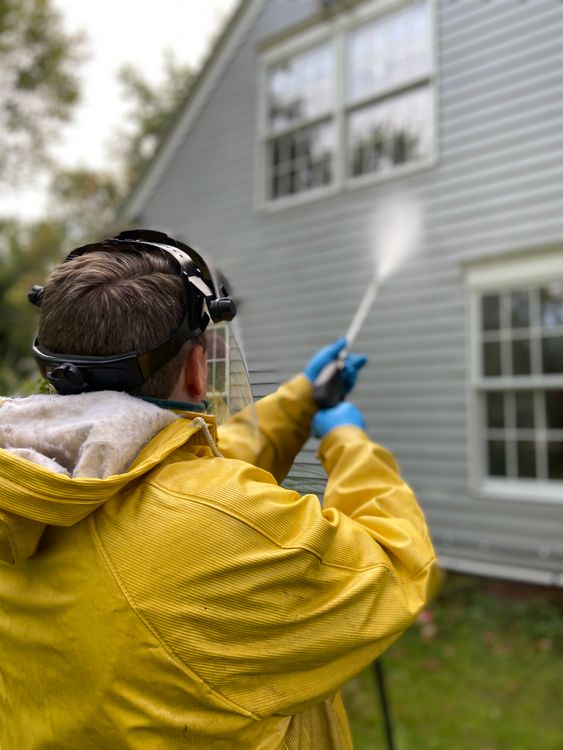
Commercial pressure washing before and after
Commercial jobs run on a schedule, not a one-off decision. 55% of commercial property owners book pressure washing every quarter, because the before-and-after isn't just cosmetic here — it's tied to hygiene codes, safety liability, and how a storefront reads to a customer walking up.
Common commercial applications
Parking lots: Oil stains, chewing gum, and rubber build up fast under daily traffic. Regular cleaning keeps the lot looking maintained and slows the surface degradation that turns into costly resurfacing.
Restaurant exteriors and kitchen areas: 53% of restaurant owners schedule pressure washing every two months, largely to stay ahead of health-code inspections. Grease, cooking residue, and heavy foot traffic build up faster than most other commercial surfaces.
Retail storefronts: The entrance is the first thing a customer judges before they're even inside. Gum-stained concrete, bird droppings, and grimy glass at the door undercut a brand no matter how the interior looks.
Fleet vehicles: 47% of fleet operators contract pressure washing every month — partly for appearance, partly because DOT and client-facing compliance standards often require it.
How much does pressure washing cost in 2026?
| Surface | Average Cost (2026) | Cost Range |
|---|---|---|
| Driveway | $210 | $100–$500 |
| House washing (full exterior) | $320 | $250–$600 |
| Deck or patio | $250 | $150–$400 |
| Fence | $150 | $80–$250 |
| Commercial parking lot (per sq ft) | $0.10–$0.30 | Varies by size |
Sources: Angi, HouseCall Pro, LawnGuru
The average household spends about $450 a year on pressure washing, usually split across a driveway and a house wash. For anyone prepping to sell, that spend is easy to justify against a sale price that can move by thousands.
When is the best time to pressure wash?
Spring, by a wide margin. Demand runs about 65% higher in spring than the rest of the year, because a winter's worth of grime, mold, and road salt is sitting on every outdoor surface by March — and a spring wash is also the prep step before sealing or painting.
That popularity has a downside: contractors book out fast once the weather turns. If a driveway or deck needs work before a spring event or a listing photo shoot, call in February, not April.
Autumn is the underrated second window. After a summer of growth, decks, patios, and driveways have picked up leaf stains and organic buildup, and a clean before the first freeze keeps that grime from working into the surface over winter.
How to preview pressure washing results before you book
The stock photos on a contractor's website show someone else's driveway. What a homeowner actually wants to know is simpler: will it lift these stains, on this concrete, or is the discoloration too deep to fully clear?
Where a contractor has a Makeover-built preview tool, that question gets answered before anyone shows up with a hose. A photo of the actual driveway, deck, or siding generates a photorealistic before-and-after preview of what a professional clean will do to that specific surface — not a stock example, the real property.
That preview is useful in a few concrete ways:
- It confirms the job is worth booking before money changes hands
- It shows what a standard clean will lift versus what needs a degreaser pre-treatment or soft wash
- It gives the contractor a target to quote against, instead of a vague "get it looking better"
- It settles the standard-pressure-wash-versus-soft-wash question up front, before the wrong method gets used on delicate siding
Ask a prospective contractor whether they offer this. Some run it again after the wash to plan the next job — showing how a new coat of exterior paint would look on the now-clean surface, for example.
The Makeover Property Clean Readiness Framework
Use this four-point check before booking any exterior cleaning job.
| Readiness Factor | What to Check | Why It Matters |
|---|---|---|
| Surface type | Is your surface concrete, wood, composite, brick, or painted? | Pressure and technique must match the surface |
| Stain type | Are stains from algae, oil, rust, or tannins? | Organic stains need different treatment than oil or rust |
| Soft vs hard wash | Does the surface have loose paint, old wood, or fragile trim? | High pressure damages fragile surfaces — soft wash is safer |
| Post-clean plan | Is sealing, staining, or painting planned after the clean? | Pressure washing opens the surface for better finish absorption |
The bottom line
Few home maintenance jobs deliver as much visible change for as little money. A driveway, deck, or house exterior that's looked the same for years can come back to close to its original color in a single session, for $100 to $600 in most cases. Book in spring if the timeline allows it — the rest of the year works too, just with more lead time to account for. And if the surface has years of buildup and there's real uncertainty about whether it'll fully clear, a before-and-after preview settles that question before anyone commits to the job.
Ready to preview your pressure washing result? Ask your contractor whether they offer an AI-generated preview. If you run a pressure washing or exterior cleaning business, share your details with the Makeover team about a custom-built preview tool for your quotes.