Medical disclaimer: This article is for informational purposes only, does not constitute medical advice, and has not been reviewed by a licensed medical professional. Results vary by individual. Always consult a qualified healthcare provider before making any healthcare decisions.
Quick answer: Microblading creates semi-permanent, hairlike strokes that fill and define your brows. Results last 18 to 30 months. Brows look darker right after the procedure, fade during weeks one to four, then settle into their final shape. A touch-up at six to eight weeks locks in the result.
Microblading is a semi-permanent brow treatment. A trained artist uses a fine-blade tool to deposit pigment into the upper layers of the skin, drawing individual hairlike strokes that mimic the direction and texture of natural brow hair. Done well, it reads as your own eyebrows, only fuller and more defined, and it holds up for up to 30 months without a daily brow pencil.
The catch is that the brows you see walking out of the studio are not the brows you keep. Microblading goes through a distinct healing arc, and most of the anxious "did I make a mistake" moments happen because clients don't know what's normal at each stage. Below is what that arc actually looks like, backed by clinical healing data, plus how to vet a studio so the result matches what you agreed to.
This guide draws on published clinical and aesthetic industry data, verified healing timelines from certified practitioners, and our own experience building AI preview tools for brow studios across the UK and US.
What does microblading look like right after the procedure?
Immediately after the session, your brows will look bolder, darker, and slightly thicker than the result you'll actually keep. That's expected — pigment sits closer to the surface before healing softens it, and the effect always overstates the final shade.
You'll likely see some redness and mild puffiness around the treated area too. That's your skin responding to the tiny incisions the blade makes, and it typically settles within a day or two.
Resist the urge to judge the result on day one. The brows you're looking at in the mirror right now are not the brows you'll be wearing in a month.
The day-by-day microblading healing timeline
Full healing takes 25 to 30 days, according to Healthline. Knowing which stage you're in is the difference between staying calm and panic-texting your artist.
Days 1 to 3: bold and bright
Brows are at their darkest and most defined — this is the "too much" phase almost everyone hits. Some swelling and tenderness around the area is normal. Keep the brows dry: no face wash, sweat, steam, or makeup directly on the treated skin.
Days 4 to 7: itching begins
As the skin knits back together it pulls tight, and light scabbing starts to form over the strokes, making brows look slightly raised or textured. The itching is genuinely hard to ignore. Don't scratch and don't pick — picking pulls pigment out with the scab and is the single most common cause of patchy, uneven results.
Days 8 to 10: the ghosting phase
This is the stage that catches almost everyone off guard. Brows can look faded, gray, or blotchy, and some strokes seem to vanish entirely. That's the ghosting phase: a thin layer of skin has formed over the pigment while it settles, and it hasn't shed yet. It's a normal, temporary part of healing, not a sign the procedure failed.
Days 11 to 21: color returns
The outer layer flakes away on its own and the pigment underneath becomes visible again — usually softer and more natural-looking than the bold, fresh strokes from day one.
Weeks 4 to 6: final result
By week four, brows have settled into their true healed shape and color, and this is the point where you can fairly judge the outcome. If anything looks patchy or too light, that's exactly what the six-to-eight-week touch-up session is for.
What do healed microblading results actually look like?
Healed microblading looks like your own eyebrows, just fuller. The hairlike strokes blend into your natural brow hair to build a defined arch, and the color softens considerably from the bold, saturated look you had on day one.
How close the final result lands to what you pictured depends on three things: your skin type, the artist's stroke technique, and how well you followed aftercare. Oily skin absorbs and fades pigment faster; drier skin tends to hold color longer and crisper.
Results last 18 to 30 months on average, per Healthline, and most clients return for a maintenance touch-up every 12 to 18 months to keep the shape and depth from fading out completely.
How much does microblading cost?
Microblading typically runs $300 to $800 in the UK and US, according to pricing data compiled by Lavishing Eyebrows, with premium artists in major cities charging up to $2,000 a session.
That price usually bundles more than a single appointment:
- An initial consultation and skin assessment
- The microblading session itself
- A perfecting touch-up at six to eight weeks, once you can see the true healed color
Annual maintenance touch-ups after that tend to cost less than the initial session, so budget for one but don't expect to pay full price again.
Demand has scaled with the price tag. The global brow and lash treatment market, which includes microblading, was valued at $1.25 billion in 2025 and is projected to grow at an 8.3% CAGR through 2033 — this isn't a niche procedure anymore, which also means the range of studio quality has widened.
How to choose the right microblading studio
A wider market means more studios to sort through, and the stakes are real: this result sits on your face for up to two and a half years. Five things separate the studios worth booking from the ones to skip.
Training and certification. Look for artists certified by a recognized body such as the Society of Permanent Cosmetic Professionals (SPCP) or PhiAcademy — both require hands-on training and assessment, not just a weekend course.
Portfolio consistency. Ask specifically for healed results, not fresh ones. Every microblading photo looks impressive on day one; healed photos at the four-to-six-week mark are what actually show an artist's skill.
Skin assessment. A good artist reviews your skin type, undertone, and natural brow shape before agreeing to a treatment plan — oily skin, for instance, needs a different stroke approach than dry skin to avoid blurring.
Sterilization practices. Microblading creates tiny skin incisions, so single-use blades and documented hygiene protocols aren't optional extras — ask directly and expect a confident answer.
Preview capability. The studios worth booking increasingly offer an AI-powered brow preview before any work begins, so you see the shape, arch, and depth on your own face before the artist picks up a blade.
The Makeover 5-Point Brow Studio Selector
We built this checklist based on our experience working with brow studios across the UK and US. Use it before booking any microblading appointment.
| Criteria | What to look for | Red flag |
|---|---|---|
| 1. Artist certification | SPCP, PhiAcademy, or equivalent | No certifications listed |
| 2. Portfolio | Healed before-and-after photos | Only fresh results shown |
| 3. Skin consultation | Pre-treatment skin type assessment | No consultation offered |
| 4. Hygiene protocol | Single-use blades confirmed | Reusable tools or vague answers |
| 5. Preview tool | AI-powered brow shape preview available | No visualization before the session |
A studio that checks all five boxes gives you the best odds of loving the result. Studios that skip criteria 4 or 5 carry the highest risk of a regret you're stuck with for two years.
Can you see microblading results before committing?
Yes — with the right studio, you can see a preview of your finished brows before the artist touches you with a blade.
That wasn't possible until recently. Clients used to have to trust a verbal description, a rough sketch, or a hope that the artist's portfolio face was close enough to their own. A lot of disappointing outcomes traced back to exactly that gap between what was described and what got tattooed.
Makeover closes that gap. A brow studio using it can generate a photorealistic preview of your finished brows on your own face in under 10 seconds — shape, arch, and color, all before a single stroke is made. You approve what you see, or you ask for adjustments, before anything becomes permanent.
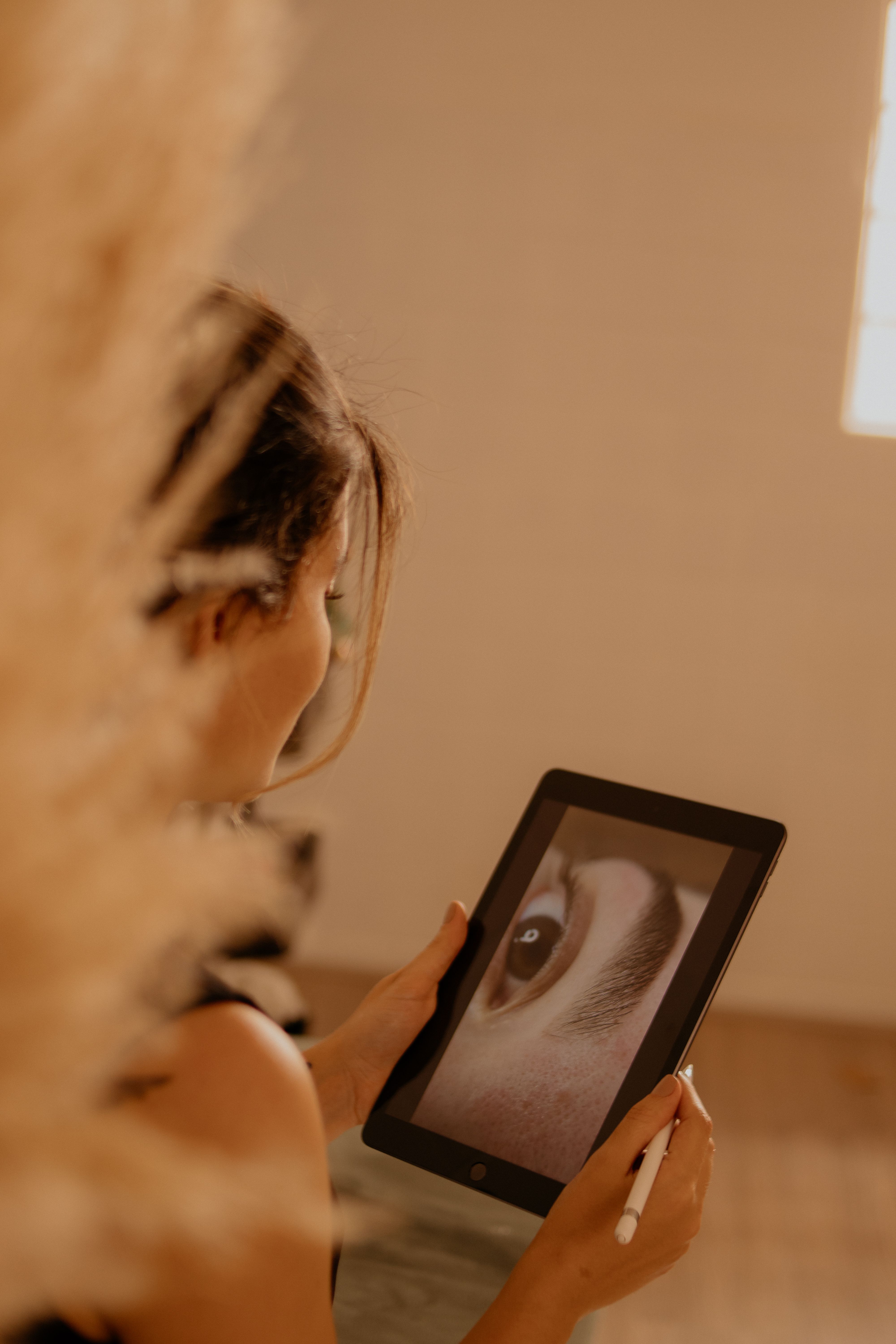
Studios that use this kind of preview tell us it changes the tone of the appointment itself: clients walk in already having approved the shape, so the session starts with confidence instead of last-minute second-guessing.
Why choose a Makeover-powered studio?
If you're choosing between two studios with similar credentials, the preview capability is often the deciding factor. Here's what a Makeover-powered studio offers that a traditional one can't:
- A photorealistic brow preview on your own face before the session starts
- Shape and color approval locked in before any pigment goes under the skin
- A visual reference you and the artist can both pull up at your six-to-eight-week touch-up
On privacy: how long a studio keeps your preview photos is entirely their call, built to meet the regulations relevant to their business — HIPAA, GDPR, or both, depending on where they operate. What doesn't happen, ever, is your photos being shared elsewhere or used to train AI models.
If you run a brow studio and want to offer this to your clients, see how Makeover works for brow specialists. We also cover how the same approach applies for dental clinics and med spas if you work across multiple treatment areas.