Quick answer: Medspa booking software manages online scheduling, automated reminders, and provider calendars for aesthetic practices. The best platforms cut no-shows, collect deposits at booking, and keep multiple providers and rooms from double-booking. What most of them can't do is get a hesitant client to commit. That's the job of AI visual consultation software, which shows a client their treatment outcome before they book — and is the single highest-impact addition to a medspa's booking funnel.
Scheduling software fixes a logistics problem: who's free, when, in which room. It doesn't fix the harder problem, which is that most people who book a consultation for Botox, a facelift, or laser resurfacing haven't decided to go through with it yet. They're gathering information. A calendar tool can't close that gap — only the consultation itself can, and what happens in that room determines whether the appointment converts to revenue or turns into a "let me think about it" that never calls back.
This guide covers what to actually look for in medspa booking software, then walks through the one addition — AI visual consultation — that changes what happens once the client is in the chair.
What should medspa booking software do?
Medspa booking software needs to do three things well: let clients book from any device at any hour, cut no-shows through automated reminders and deposit collection, and keep provider and room calendars accurate enough that nothing gets double-booked.
Nearly every platform on the market handles those three functions adequately — that's table stakes, not a differentiator. Where systems actually separate is what happens around the booking moment itself: whether the software helps warm a client up before they walk in, and whether anything in the workflow helps convert them before they walk out.
The U.S. medical spa management software market is growing at 13.6% annually toward USD 282.7 million by 2030, which tells you every competing medspa in your market is already investing in scheduling tools. Calendar software alone won't be your edge. What you add to the consultation will be.
The 6 features that separate good booking software from great
1. Real-time availability sync. Clients need to see accurate slots across every provider, room, and piece of equipment at once. Double-book one client into a slot that's already taken and you've spent your first interaction apologizing instead of selling.
2. Automated deposit collection. A deposit at booking removes the zero-cost cancellation option. Look for software that collects it inline, as part of the booking flow — anything that requires a separate step gets skipped.
3. Multi-channel reminders. Text outperforms email for same-day recall. The strongest setups send both, timed to match your specific cancellation window rather than a generic 24-hour default.
4. HIPAA-compliant intake forms. Medical history, consent, and contraindication screening completed before the client arrives saves chair time and keeps your documentation defensible.
5. Multi-provider and multi-room scheduling. Past two providers or treatment rooms, manual calendar management starts creating conflicts. The system needs to show all availability in one view.
6. Visual consultation integration. Almost no scheduling platform offers this natively, which is exactly why it's the biggest lever left on the table. Showing a client a preview of their own result at the consultation stage changes the conversation more than any reminder sequence or deposit policy. More on this below.
The Makeover.so booking conversion scorecard
Run your booking workflow against this scorecard. Each row is a moment where a client decides to move forward or quietly drop off.
| Booking stage | Question to ask | Conversion impact |
|---|---|---|
| Online booking page | Can clients see what each treatment actually does before booking? | High |
| Intake form | Is it mobile-friendly and completed in under 3 minutes? | Medium |
| Confirmation message | Does it include social proof or a treatment preview image? | Medium |
| Consultation start | Do you show the client a visual preview of their own result? | High |
| Post-consultation close | Does the client leave with a deposit paid and a date booked? | Very high |
| Follow-up sequence | Do no-show or "thinking about it" clients get a rebooking message within 48 hours? | Medium |
Most medspas score fine on the middle rows and weak on the first and fourth. Those two gaps — showing the treatment before booking, and showing the result during the consultation — are where the real revenue is sitting unclaimed.
How to reduce no-shows at your medspa
No-shows are a revenue problem, not a client-attitude problem, and three tools handle most of it without adding work for staff.
A deposit collected at booking removes the zero-cost cancel option. Clients who've already paid something are far more likely to keep the appointment or cancel with enough notice to rebook the slot.
Automated SMS reminders sent roughly 48 hours and 2 hours out catch the clients who'd otherwise simply forget — text consistently beats email for same-day recall.
A rebooking sequence triggered by a cancellation brings clients back within days, not weeks. Someone who cancels same-day usually still wants the treatment; a fast, low-friction message captures that intent before it fades. For a deeper breakdown of where injectable consultations specifically fall off, see our guide on reducing injectable consultation no-shows.
All three run inside the booking software layer with no manual follow-up required from your front desk.
Why visual consultation increases booking conversion
Booking software fills your calendar. Visual consultation fills it with clients who've already decided.
The core problem with aesthetic treatments is that a consultation booking isn't a commitment — it's research. The client is comparing you to two other clinics, reading reviews, and trying to picture an outcome they've never seen on their own face or body. A verbal description of "softened lines" or "improved volume" asks them to imagine the result and then decide to spend hundreds or thousands of dollars on that imagination. Most people won't. They say they'll think about it, and thinking about it usually means never calling back — a pattern borne out across aesthetic consultation conversion data.
A photorealistic preview changes what the client is deciding. Instead of imagining a hypothetical, they're looking at their own face with the Botox result, their own nose after rhinoplasty, their own skin after a laser series. The decision stops being abstract. Makeover.so generates that preview from a single photo in under 10 seconds, so a treatment coordinator can show it before the client leaves the room — while they're still sitting across from someone who can book them on the spot.
| Without visual consultation | With AI visual consultation |
|---|---|
| Client imagines the result from a verbal description | Client sees their own face or body with the result applied |
| Decision gets deferred to "I'll think about it" | Decision happens in the room, while it's still real |
| Conversion depends heavily on one provider's pitch | Conversion depends less on any single provider's selling skill |
What treatments can clients preview before booking?
Makeover.so supports photorealistic AI previews for the procedures that make up most medspa revenue:
- Botox and neuromodulators: softened lines and a refreshed expression on the client's own face
- Dermal fillers: volume and contouring mapped to the client's actual features
- Facelift previews: skin tightening and rejuvenation results
- Rhinoplasty simulation: nose reshaping ahead of surgical or non-surgical procedures
- CO2 laser resurfacing: texture and tone changes on the client's real skin
- Skin rejuvenation: results for microneedling, chemical peels, and similar treatments
- Lip filler augmentation: volume and shape changes before treatment
See our deeper guides on facelift consultations, Botox simulation for clinics, and CO2 laser resurfacing outcomes for how each preview type works in practice.
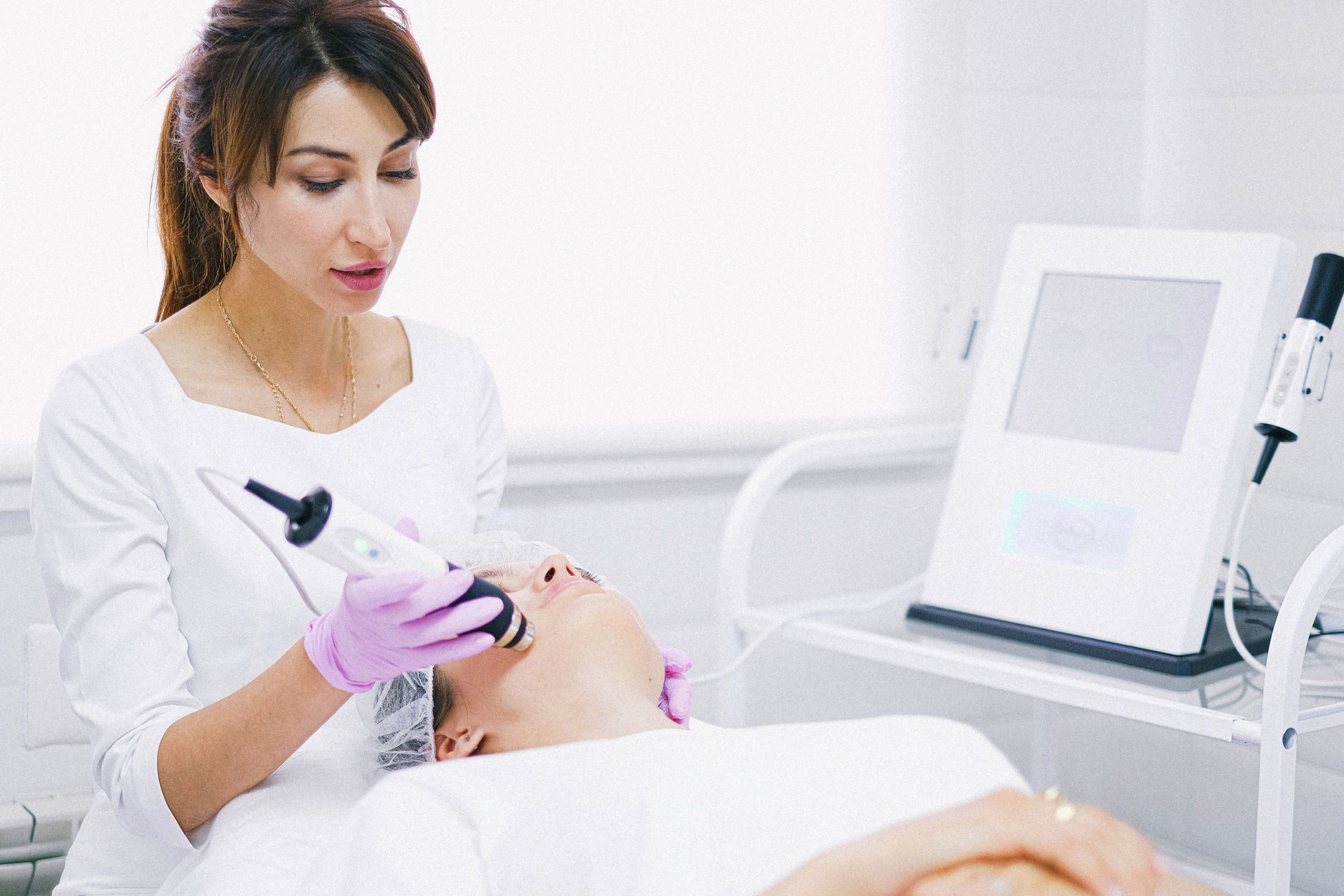
Medspa booking software pricing
Booking software cost scales with practice size and feature depth:
| Platform type | Typical price range | What it includes |
|---|---|---|
| Basic online booking | $30 to $80/month | Scheduling, reminders, basic client records |
| Full practice management | $150 to $500/month | Booking, EHR, billing, inventory, marketing |
| Enterprise (multi-location) | Custom pricing | Full suite with advanced analytics |
| AI visual preview (Makeover) | Custom quote | Bespoke build, scoped to your practice after a free consultation |
Cloud-based platforms hold 68.7% of the medspa software market because they cut hardware costs, allow remote access from any location, and scale as a practice adds providers or opens new locations.
There's no published price for Makeover's AI visual preview software — every build is custom-scoped to your practice, your treatment mix, and your compliance requirements. Share your details and our team will walk you through it on a free consultation call.
Why Makeover.so completes your booking workflow
Booking software solves the logistics of scheduling. Makeover.so solves the conversion problem that happens before the booking sticks: a client who's being asked to spend hundreds or thousands of dollars on a procedure they've never actually seen, on themselves, before saying yes.
Here's what it adds to whatever booking platform you already run:
- Chairside consultation conversion: a preview generated in under 10 seconds during the client meeting
- No extra hardware: works from a smartphone camera your staff already carry
- Privacy built in by design: HIPAA-compliant, with retention policy set entirely by your practice
- Multi-treatment support: covers everything from injectables to surgical previews
- No integration required: layers onto any booking platform with no data sync needed
Add a Makeover-built preview to your booking workflow and watch what happens to your same-day booking rate. Share your details with our team for a free consultation, and we'll scope a custom build for your practice.