Medical disclaimer: This article is for informational purposes only, does not constitute medical advice, and has not been reviewed by a licensed medical professional. Results vary by individual. Always consult a qualified healthcare provider before making any healthcare decisions.
Quick answer: Teeth whitening removes surface and internal tooth stains using peroxide-based bleaching agents. In-office treatments lighten teeth 5–8 shades in a single session. At-home trays produce 3–6 shade improvements over 2–4 weeks, and OTC strips produce 2–4 shades over the same period. Results last 1–3 years depending on diet and oral hygiene.
What is teeth whitening? Teeth whitening uses hydrogen peroxide or carbamide peroxide to break apart stain compounds in tooth enamel and dentin. The strength of the bleaching agent and the delivery method shape how big the before-and-after difference will be.
This guide is based on published dental research, cosmetic dentistry guidelines, and market data to help patients understand realistic outcomes from every whitening method.
What changes before and after teeth whitening
The main change after teeth whitening is shade. Teeth are measured on a shade guide — most often the VITA Classical scale, which runs from B1 (brightest natural white) through darker yellows and greys. Here is what typically shifts.
| Factor | Before | After |
|---|---|---|
| Shade | A3–A4 (yellow-brown) typical for adults | B1–A2 with professional treatment |
| Surface stains | Coffee, tea, wine staining on enamel | Fully or largely gone |
| Internal stains | Deeper yellowing in dentin | Improved but harder to fully remove |
| Smile confidence | Often cited as a self-reported concern | Improved in patient-reported outcomes |
| Enamel appearance | May look dull or cloudy | Brighter, more translucent appearance |
The deeper the stain, the more sessions are needed and the higher the peroxide strength required to see a visible change.
Every whitening method compared
| Method | Peroxide Strength | Shades Improved | Time to Results | Cost | Duration |
|---|---|---|---|---|---|
| In-office (Zoom, laser) | 25–40% hydrogen peroxide | 5–8 shades | 1 session (60–90 min) | $300–$1,500 | 1–3 years |
| Dentist take-home trays | 10–22% carbamide peroxide | 3–6 shades | 2–4 weeks | $200–$600 | 1–2 years |
| OTC whitening strips | 5–10% hydrogen peroxide | 2–4 shades | 2–4 weeks | $30–$80 | 6–12 months |
| Whitening toothpaste | Abrasive/low peroxide | 1–2 shades (surface only) | 4–6 weeks | $5–$20 | Ongoing with use |
| Charcoal/natural products | None or minimal | Minimal to none | N/A | $10–$40 | N/A |
The ADA's MouthHealthy guide advises patients to look for the ADA Seal of Acceptance on any OTC whitening product — it means the product has been tested for both safety and results. Whitening toothpaste led with 42.5% of the global teeth whitening market share in 2024, though professional treatments produce the biggest before-and-after change.
Before and after results by stain type
Extrinsic (surface) stains
Caused by coffee, tea, red wine, tobacco, and certain foods. These stains sit on the enamel surface. They respond well to all whitening methods. Even strips produce a clear improvement for surface-stained teeth.
What you will see after: Brighter teeth within 1–2 weeks with strips, one session with in-office treatment.
Intrinsic (internal) stains
Caused by aging, fluorosis, tetracycline antibiotics, or trauma. These stains sit in the dentin layer beneath the enamel and are harder to treat.
What you will see after: Moderate improvement with in-office treatment. Severe tetracycline staining may not fully respond to peroxide alone. Veneers may be needed for a full cosmetic fix.
Age-related discoloration
As enamel thins with age, the darker dentin layer shows through. Peroxide bleaches dentin as well as enamel, making professional whitening effective for age-related yellowing.
What you will see after: Clear improvement in overall brightness. Results are often bigger for older patients with heavy age-related yellowing than for younger patients with mild staining.
In-office whitening: what to expect step by step
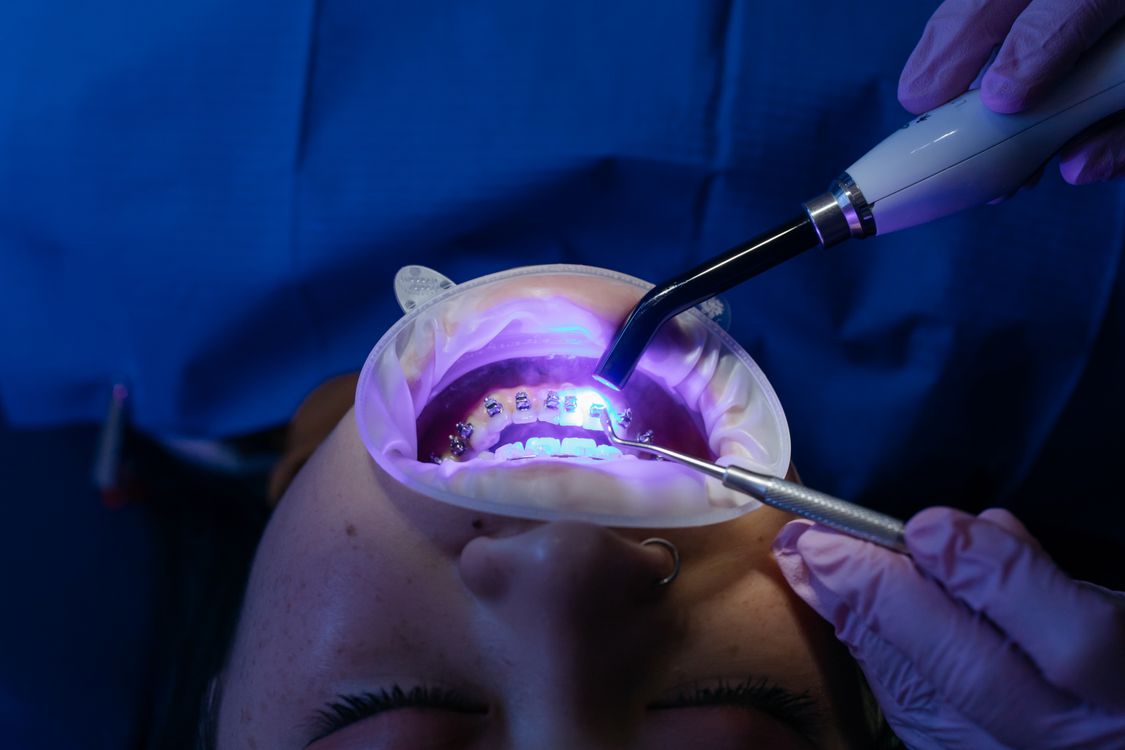
In-office treatments are the fastest path to brighter teeth. The ADA notes that in-office bleaching agents use higher concentrations of hydrogen peroxide — typically 15% to 43% — which reduces treatment time and can deliver visible results after a single appointment.
Step 1 — Assessment: Your dentist photographs your current shade. They check for cavities or gum issues that must be treated before whitening. They discuss your shade goal.
Step 2 — Preparation: Lips and gums are protected with a rubber dam or gel to prevent the bleaching agent from causing irritation.
Step 3 — Gel application: A high-concentration hydrogen peroxide gel (25–40%) is applied to the tooth surfaces.
Step 4 — Light activation (optional): Some systems, including Philips Zoom, use a UV or LED light to speed up the bleaching reaction. Sessions typically take 60–90 minutes.
Step 5 — Rinse and shade check: The gel is removed, teeth are rinsed, and a final shade check is taken.
Most patients achieve 5–8 shade improvements in a single visit. Patients with severe intrinsic staining may need a second session.
At-home whitening: results timeline
At-home options need daily use but produce real results for patients who stick to a routine.
Dentist-prescribed take-home trays
| Timeframe | What you experience |
|---|---|
| Days 1–3 | Mild sensitivity, earliest surface stain lightening |
| Days 7–10 | Clear shade improvement, especially on surface stains |
| Days 14–21 | 3–5 shade improvement visible in most patients |
| Days 21–28 | Full results achieved, intrinsic staining improved |
Custom trays outperform strips because the gel stays in close contact with the tooth surface. This produces more even, consistent results across all teeth.
Over-the-counter whitening strips
OTC strips are the most affordable entry point. The lower peroxide strength limits how deep the bleaching reaches.
| Timeline | Expected result |
|---|---|
| Week 1 | Surface stains begin to lighten |
| Week 2–3 | 2–3 shade improvement typical |
| Week 4 | 2–4 shade improvement maximum |
For patients with only surface staining and mild discoloration, strips can produce a clear result at low cost.
Risks and side effects
Teeth whitening is one of the safest cosmetic dental procedures. Side effects do occur, but they are usually mild and short-lived. The ADA advises that a clinical exam before whitening can help identify factors contributing to tooth discoloration and reduce the risk of complications.
Common side effects:
- Tooth sensitivity: the most common complaint — sharp sensitivity to cold, hot, or sweet. Usually lasts 24–72 hours after treatment.
- Gum irritation: from contact with the bleaching agent. Clears quickly with proper protection.
Less common issues:
- Uneven whitening: natural teeth whiten, but crowns, veneers, and bonding do not. Patients with existing dental work may see mismatched shades after whitening. Discuss this before treatment.
- Over-bleaching: repeated whitening beyond your shade goal can weaken enamel over time.
- Relapse: without maintenance, whitening fades — especially for patients who drink coffee, tea, and red wine daily.
Who should not whiten: Whitening is not right for patients who are pregnant, children under 16, or patients with untreated cavities, gum disease, or severe dental sensitivity. Always tell your provider about existing crowns, veneers, or bonding before you proceed.
How to prepare before whitening
Good preparation produces better, more even results.
Two weeks before treatment:
- Resolve any dental issues — cavities and gum problems must be treated first
- Use a sensitivity toothpaste (containing potassium nitrate) for 2 weeks before in-office treatment
- Stop using abrasive whitening toothpastes in the week before
Day of treatment (in-office):
- Arrive with clean, freshly brushed teeth
- Avoid staining foods or drinks for 24 hours before
- Avoid coffee, tea, and red wine for 24–48 hours after
How to maintain your results
The global teeth whitening market is valued at about USD 8 billion in 2026. 52% of adults rate tooth brightness as a top oral health priority. Yet most patients see results fade within 12 months without a maintenance plan.
High-impact maintenance habits:
- Rinse with water right after coffee, tea, or red wine
- Use a whitening toothpaste (low-abrasion, not charcoal) 3–4 times per week
- Use at-home trays for one application per month after the first treatment
- Schedule a professional cleaning every 6 months to remove surface buildup
- Avoid tobacco — it is the fastest way to stain whitened teeth
Patients who follow a maintenance routine extend results to 2–3 years between professional treatments.
How much does teeth whitening cost?
| Method | Cost Range | Notes |
|---|---|---|
| In-office (Zoom/laser) | $300–$1,500 | Single session; fastest results |
| Dentist take-home trays | $200–$600 | Custom fit; 2–4 weeks |
| OTC whitening strips | $30–$80 | Lower peroxide; slower results |
| Whitening toothpaste | $5–$20 | Maintenance only; minimal improvement |
Most dental insurance plans do not cover cosmetic whitening. Some practices offer payment plans.
For patients with deep intrinsic staining that does not respond to whitening, porcelain veneers ($900–$2,500 per tooth) may be a longer-lasting fix. A dentist who can show you a whitening preview and a veneer preview side by side — using your actual photo — helps you choose the right investment.
The Makeover Smile Preview Framework
67% of US adults have tried to whiten their teeth, and unhappy results are still common. The gap almost never comes from a bad procedure — it comes from a patient walking in expecting stock-photo-white and walking out with a realistic B1. Showing a patient their own teeth, simulated at their actual achievable shade, closes that gap before it opens.
That is the moment we built Makeover's AI preview for. Here is how practices use it in a whitening consultation:
| Step | What to do | Outcome |
|---|---|---|
| 1. Photo capture | Patient photo taken at consultation (front-facing, neutral expression) | Baseline image created for preview |
| 2. Shade goal selection | Provider sets target shade on the VITA scale, matched to stain type | Preview calibrated to a realistic, achievable outcome |
| 3. AI preview generation | Makeover generates a photorealistic whitened smile on the patient's own photo in under 10 seconds | Patient sees their specific result, not a stranger's smile |
| 4. Comparison review | Provider walks through the before-and-after side by side with the expected timeline | Patient books with a clear, calibrated expectation |
A patient who sees their own calibrated result commits with a clear picture instead of a vague promise — and a practice that sets that expectation up front fields fewer "it didn't look like the photos" conversations after treatment. If your current provider can't show you a preview built from your own face, ask why before you book.
See how Makeover works for dental practices →
Bottom line
Teeth whitening delivers some of the fastest, most affordable cosmetic improvements in dentistry. In-office treatments produce 5–8 shade changes in under 90 minutes. At-home options take 2–4 weeks but cost far less. The method you choose should match your stain type, timeline, and budget. Whatever approach you pick, setting a clear shade goal before treatment — and knowing which stains whiten easily versus which need more work — makes the difference between a result you love and one that falls short.