Medical disclaimer: This article is for informational purposes only, does not constitute medical advice, and has not been reviewed by a licensed medical professional. Results vary by individual. Always consult a qualified healthcare provider before making any healthcare decisions.
Quick answer: Laser tattoo removal breaks ink into tiny fragments the immune system then flushes out over several weeks. Most tattoos need 6–12 sessions spaced 6–8 weeks apart. Black ink clears fastest and often shows visible fading after the first session; blue, green, and yellow pigments resist more laser wavelengths and need more passes.
What is laser tattoo removal? A laser fires short, high-intensity pulses that shatter ink particles into fragments small enough for the lymphatic system to carry away. Nothing happens instantly — each session breaks up one more layer, and the fading you see between visits is your own body doing the clearing, not the laser itself. That's why the timeline runs in weeks, not days, and why patients who understand the mechanism tend to stick with the full series instead of quitting after session three when progress looks slower than they expected.
What changes session by session
No two tattoos fade on the same schedule, but the arc follows a predictable shape.
| Session Range | What you see | What to expect |
|---|---|---|
| Session 1 | Outline fading begins, especially on black ink | Redness, frosting (white surface reaction), swelling after treatment |
| Sessions 2–3 | Clear fading — image starts to look washed out | More ink breaks up; skin around the tattoo looks cleaner |
| Sessions 4–6 | Strong lightening; most of the design has lost shape | Black fades fastest; colors stay longer |
| Sessions 7–10 | Ghost image remains — faint outline or shadow | Near-complete removal for black and grey tattoos |
| Sessions 10–12 | Complete or near-complete removal for most tattoos | Final sessions target leftover ink, shading, and color |
Progress isn't linear, and that trips up more patients than anything else. Some sessions produce a dramatic jump; others look barely different even though the immune system is still clearing ink underneath the surface. A flat-looking session 5 doesn't mean the treatment stopped working — it means the visible fade and the biological clearing aren't perfectly in sync. Judging removal by any single session is the fastest way to talk yourself into quitting early.
Laser technology: Q-switched vs picosecond
Ask any tattoo removal tech what matters most before session count, ink color, or skin tone, and the answer is which machine is in the room.
| Technology | Pulse Duration | Ink Particle Size | Best For | Sessions Required |
|---|---|---|---|---|
| Q-switched Nd:YAG (nanosecond) | Nanoseconds | Larger fragments | Black ink, dark colors | Typically more sessions |
| Picosecond (PicoWay, PicoSure) | Picoseconds (1000x faster) | Much smaller particles | All colors including stubborn blues/greens | Fewer sessions typically |
Picosecond lasers fire pulses roughly a thousand times shorter than Q-switched systems, which shatters ink into finer particles the lymphatic system clears more efficiently. The Candela PicoWay uses three separate wavelengths in one device, giving it a shot at colors that used to require switching machines mid-series — blue and green included.
The practical takeaway for a patient shopping clinics: ask what equipment they use before you ask about price. A clinic running only older Q-switched tech isn't wrong to use it — it still works well on black ink — but it will generally need a longer series to reach the same endpoint a picosecond system reaches, especially on color work.
How ink color affects your results
Ink color is the single biggest variable in how long removal takes, and it's the one most patients don't factor in when they book their first consultation.
| Ink Color | Laser Wavelength Needed | Removal Difficulty | Expected Sessions |
|---|---|---|---|
| Black | 1064nm (Nd:YAG) | Easiest — absorbs all wavelengths | 6–8 sessions |
| Dark blue/dark purple | 1064nm | Moderate | 8–10 sessions |
| Red, orange | 532nm (KTP) | Moderate | 8–10 sessions |
| Green | 694nm (Ruby) or 755nm (Alexandrite) | Difficult | 10–12+ sessions |
| Light blue, turquoise | 755nm or multi-wavelength | Very difficult | 10–15+ sessions |
| Yellow, white | Least absorbed by standard wavelengths | Hardest; sometimes incomplete | 12–15+ sessions |
Black ink fades most reliably because it absorbs the full spectrum of laser wavelengths clinics use — there's nowhere for the light to "miss." Colors are pickier: each pigment only absorbs certain wavelengths well, so a tattoo with five colors in it may need a laser system that can cycle through several wavelengths in the same session, plus more total sessions than an equivalent black-ink piece.
How many sessions will you need?
There's no single number — but there is a formula clinicians actually use. The Kirby-Desai Scale scores a tattoo across six factors to estimate the session count before treatment starts:
| Factor | Lower Score (fewer sessions) | Higher Score (more sessions) |
|---|---|---|
| Skin tone | Fitzpatrick I-II (lighter) | Fitzpatrick V-VI (darker) |
| Ink color | Black only | Multi-color with difficult pigments |
| Ink volume | Fine line, minimal shading | Heavy shading, thick lines |
| Tattoo age | New (less consolidated ink) | Older (more consolidated) |
| Scarring/tissue change | None | Present |
| Layering | Single session tattoo | Cover-up over previous work |
Two details surprise patients most. First, a clean, professional tattoo can take longer than a shaky amateur one — professional machines pack ink deeper and more evenly, so there's simply more of it to break up. Second, cover-ups are their own category: a cover-up carries the original ink plus everything layered on top of it, roughly double the pigment of a single-session piece, which makes it one of the harder jobs a removal clinic takes on.
Nearly a quarter of people with tattoos say they regret at least one — a big reason removal and cover-up work now sit side by side on the same clinic menu instead of being separate businesses.
Tattoo removal recovery timeline
The laser does its work in seconds. Everything that determines whether you see a clean result happens in the weeks after, while the skin heals and the immune system does the actual clearing.
| Timeframe | What you experience | What to do |
|---|---|---|
| Immediately after | Frosting (white surface reaction), redness, swelling | Cold compress; do not pick or rub |
| Hours 2–24 | Swelling increases; area may blister | Keep clean and dry; do not pop blisters |
| Days 2–7 | Blistering clears; skin may peel | Gentle cleansing; apply prescribed ointment |
| Days 7–14 | Surface heals; looks similar to before treatment | Normal activity resumes; protect from sun |
| Weeks 4–8 | Immune system clears shattered ink — fading happens | Allow full healing before next session |
Here's the part that catches people off guard: the skin looks basically normal again within two weeks, but the actual fading — the part you're paying for — is still happening underneath for another month or more. Booking the next session too early, before the lymphatic system has finished clearing the last round of ink, doesn't speed anything up. It just adds more ink for the body to process at once.
What affects removal speed?
Laser type and ink color set the baseline, but five other factors decide whether a patient lands at the fast end of the session range or the slow end.
Immune system health. The lymphatic system physically carries broken ink fragments out of the treated area. A patient who's active, hydrated, and not smoking clears ink between sessions noticeably faster than one who isn't.
Tattoo age. Older tattoos (10+ years) tend to have more densely packed ink, which sounds like bad news — but years of natural sun exposure and cell turnover have usually already faded some of it, so there's often less total ink left to remove than a fresh piece.
Tattoo location. Areas with strong blood flow — upper back, thighs, upper arm — clear faster because the lymphatic system has more to work with there. Hands, feet, and fingers sit further from major lymph nodes and consistently take longer.
Skin tone. Lighter skin tolerates higher energy settings safely. Darker skin needs the provider to dial settings down to avoid pigment changes, which usually means more sessions to reach the same endpoint.
Smoking. Research on laser tattoo removal outcomes has linked smoking to slower clearing and more sessions needed — nicotine constricts blood flow and blunts the lymphatic response the whole process depends on.
Risks and side effects
Done by a trained provider with well-maintained equipment, laser tattoo removal is a low-risk procedure — but "low-risk" isn't the same as "no risk," and patients should walk in knowing the difference between what's expected and what's a red flag.
Expected temporary side effects:
- Redness, swelling, and frosting right after treatment (a normal reaction, not a complication)
- Blistering in the first 24–48 hours
- Temporary darkening or lightening of skin during healing
Rarer risks worth asking your provider about directly:
- Post-inflammatory hyperpigmentation (PIH): darkening of the treated skin, more common in darker skin tones; usually resolves with lower settings and time
- Hypopigmentation: lightening of the treated skin, more likely when settings run too aggressive for the patient's tone
- Scarring: rare with modern picosecond equipment; more associated with older systems, over-aggressive settings, or blisters that get picked or infected during healing
- Incomplete removal: certain pigments — yellow, white, and some greens — resist even the best current lasers. A provider who's upfront about this before you commit to a full series is one worth trusting
Non-laser methods. Dermabrasion, surgical excision, and removal creams all exist, and none of them are what dermatologists reach for first. They carry a meaningfully higher scarring risk and produce less predictable results than laser removal, which is why laser has become the default across the industry.
The Makeover Removal Preview Framework
"Ghost image" and "80% faded" mean nothing until a patient sees it on their own skin. Stock before-and-afters of someone else's forearm don't translate — different ink density, different skin tone, different tattoo age. That gap is exactly where mid-series drop-off happens: a patient books six sessions expecting linear progress, session four looks underwhelming compared to what they pictured, and they stop coming back before the ink is actually gone.
Makeover's AI preview tool closes that gap by simulating the patient's own tattoo at upcoming milestones, built from a photo taken at intake:
| Step | What to do | Outcome |
|---|---|---|
| 1. Photo intake | Patient provides a clear photo of the tattoo | Baseline image prepared for simulation |
| 2. Session milestone selection | Provider selects target milestones (50% fade, 80% fade, full removal) | Preview calibrated to the patient's ink color and projected session count |
| 3. AI preview generation | Makeover generates a fading progression | Patient sees their own tattoo at session 3, session 6, and full removal |
| 4. Treatment plan alignment | Provider walks through the session plan alongside the preview | Patient commits to the full series with expectations set from day one |
For the clinic, this turns an abstract session count into a picture the patient can hold onto between visits — which is often the difference between a patient who finishes the series and one who quietly stops booking after session four.
See how Makeover works for tattoo studios and removal clinics →
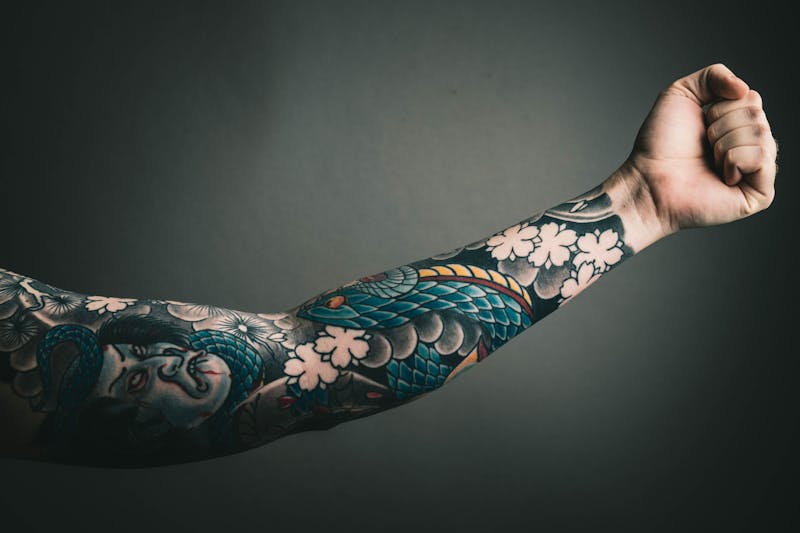
Photo by Kevin Bidwell on Pexels — Free to use under the Pexels License
How much does tattoo removal cost?
Multiply the per-session fee by the session count, and the real budget for full removal becomes clear fast — which is why quoting "per session" alone undersells what patients actually pay.
| Cost Factor | Typical Range | Notes |
|---|---|---|
| Per session fee | $200–$500 | Varies by tattoo size and clinic |
| ASPS average per session | $697 | Board-certified provider average |
| Full removal (6–12 sessions) | $1,200–$5,000 | Depends on tattoo complexity |
Demand for removal isn't niche anymore. The global tattoo removal market was valued at roughly $1.13 billion in 2024 and is projected to keep growing through 2032, with millennials and Gen Z making up the largest share of patients seeking it out.
What pushes the total up:
- Larger tattoo surface area
- Multi-color inks that need multiple laser wavelengths
- Cover-up tattoos, which carry roughly double the ink of a single-layer piece
- Clinics running only older Q-switched tech, which typically means a longer series
What brings it down:
- A clinic running picosecond equipment, which tends to shorten the series
- Package pricing for the full series instead of paying session-by-session
- Not adding new ink over an area you're already planning to remove
Bottom line
Full removal is realistic for most tattoos, but it's a schedule, not a single appointment: 6 to 12 sessions, spaced 6 to 8 weeks apart, with black ink leading the fade and yellow, green, and turquoise trailing behind. Picosecond lasers shorten that timeline compared to older Q-switched systems, but the biggest variable is still the patient — the ones who finish the full series, protect their skin between visits, and start with a provider who's honest about session count and cost end up with the cleanest results.