Medical disclaimer: This article is for informational purposes only, does not constitute medical advice, and has not been reviewed by a licensed medical professional. Results vary by individual. Always consult a qualified healthcare provider before making any healthcare decisions.
Quick answer: A rhinoplasty before and after shows a nose reshaped to fit the rest of the face, not a new nose. What changes — bridge height, tip shape, nostril width, or all three — depends entirely on which structures were treated. Bruising fades within two weeks and most patients feel comfortable in public by day 10 to 14, but the nasal tip keeps settling for 9 to 12 months before the true final result shows.
What does a rhinoplasty before and after actually show? It shows the visual change in nose shape and profile after surgery, tracked across two views — frontal (width, symmetry, nostril shape) and profile (bridge height, tip projection, the angle where the nose meets the lip) — and across a healing timeline that runs from the first day after surgery to the one-year mark, when swelling has fully cleared and the result is final.
This guide draws on published research from ScienceDirect, NCBI Bookshelf, ASPS and ISAPS 2024 surgical data, and Cleveland Clinic and Mayo Clinic clinical guidance.
How common is rhinoplasty in 2026?
Rhinoplasty remains one of the most requested cosmetic surgeries in the world. The ASPS 2024 Statistics Report recorded 180,000 rhinoplasties in the US in 2024, up 3% from the year before. Globally it holds a spot in the top five surgical cosmetic procedures, according to ISAPS 2024 Global Survey data.
It's not a young person's procedure. Patients aged 20 to 34 and patients aged 40 to 54 each account for roughly 26% of cases — nearly identical shares. A crooked bridge or a tip that never settled into an adult shape doesn't become less noticeable with age, and plenty of patients wait until their late 30s or 40s to finally address it.
What has changed is how patients get to "yes." 85% of rhinoplasty consultations now use 3D imaging or virtual simulation so patients can see a projected result before agreeing to a permanent, hard-to-reverse procedure — which is exactly the gap this guide and the visual examples below are meant to close.
What does rhinoplasty before and after look like?
A good result looks like a nose that was always supposed to be there. The change should improve the whole face, not pull attention toward the nose itself — a nose that visibly looks "done" almost always signals over-correction or a technique mismatched to the patient's anatomy.
The target is facial harmony: balance between the nose, eyes, lips, chin, and jawline, not a specific nose shape copied from a reference photo. That's also why results vary so much by patient. Someone correcting a large dorsal hump ends up with a fundamentally different profile than someone narrowing a wide tip, even though both had "a rhinoplasty."
The satisfaction data backs this up. ScienceDirect research from 2024 tracked patients at 6 months post-surgery and found nasal appearance scores climbed from 3.2 out of 10 before surgery to 7.9 out of 10 after — one of the largest satisfaction jumps recorded in cosmetic surgery research.
What the first few days actually look like: the nose is splinted and taped, and swelling and bruising around the eyes is normal, not a warning sign. The nose typically looks larger immediately after surgery — that's swelling, not the result. Breathing through the nose is usually restricted for the first 7 to 10 days while internal swelling resolves.
Rhinoplasty before and after by concern type
Dorsal hump reduction
A dorsal hump — the bump on the bridge visible in profile — is one of the single most common reasons patients book a rhinoplasty consultation in the first place.
Before: a visible bump creates a convex profile that draws the eye to the nose and can make it read as longer than it is. After: the hump is filed or shaved down through bone and cartilage. The profile flattens to straight, or to a slight concave curve if that's what the patient and surgeon agreed on. Seen from the front, the nose reads slimmer even though the width wasn't directly touched — flattening the profile changes how the whole nose is perceived.
Bridge results settle fastest: full results show at 3 to 6 months, with only fine refinement continuing out to 12 months.
Tip refinement
The tip is the hardest part of the nose to reshape and the last part to finish healing. Tip rhinoplasty covers bulbous, boxy, drooping, or upturned tips — four different problems that share one fix strategy.
Before: the tip looks wide, round, or undefined from both the front and the side. After: sutures reposition the cartilage, sometimes reinforced with cartilage grafts, to build projection, definition, or narrowing. Patients starting with a wide tip usually see the largest frontal-view change in the entire before-and-after set — the nose reads as structured rather than soft.
Expect the tip to keep moving for a full year. Its cartilage and the skin covering it are thicker and slower to remodel than the bridge, so 9 to 12 months is the realistic finish line, not a pessimistic one.
Nostril reduction (alarplasty)
Alarplasty narrows nostril width or flare, done either as its own procedure or bundled into a larger rhinoplasty.
Before: nostrils that flare wide from the front, most noticeable when smiling. After: small incisions at the base of each nostril remove a wedge of tissue, narrowing the base. Because the cuts sit in the natural crease where nostril meets cheek, scars are close to invisible once healed, and the front view shows a visibly narrower nasal base.
Deviated septum correction (septorhinoplasty)
A deviated septum is a structural breathing problem, not a cosmetic one — but septorhinoplasty fixes both at once.
Before: the nose may look visibly crooked from the front, and one or both nostrils are chronically blocked regardless of allergy season. After: the septum is straightened to open the airway, and the nose reads straighter and more symmetrical as a side effect of that structural fix. Most patients book this procedure for the breathing improvement — the cosmetic change is the part they didn't expect to love as much as they do.
Non-surgical rhinoplasty (filler)
Not ready for surgery, or want to test-drive a subtler version of the change first? Temporary filler can smooth a small hump, lift a drooping tip, or straighten the visual line of the profile without an incision.
Before: minor bumps, asymmetry, or unevenness along the bridge or tip. After: 0.5 to 1ml of hyaluronic acid filler is injected to smooth the bridge or add lift where needed, and the profile reads straighter. Results last 9 to 12 months before the filler resorbs. One limit worth setting expectations on: filler adds volume, it can't remove it — it can disguise a bump but it can't make a nose smaller.
Open vs. closed rhinoplasty: visual differences
| Approach | Incisions | Visible Scar | Best For | Recovery |
|---|---|---|---|---|
| Open rhinoplasty | Columella + inside nostrils | Tiny columella scar (fades in 6–12 months) | Complex reshaping, tip work, revision | 7–14 days to social activities |
| Closed rhinoplasty | Inside nostrils only | None visible externally | Less extensive changes, bridge work | 5–10 days to social activities |
The technique doesn't change what the nose ends up looking like — it changes how much access the surgeon has to get there. Open rhinoplasty gives full visibility of the nasal framework, which is why it's the default for complex tip work, structural grafts, and revision cases where the surgeon needs to see everything. That columella scar fades to a near-invisible line by 6 to 12 months; in daily conversation, most people never notice it.
Closed rhinoplasty trades some of that access for a faster recovery and zero external scar. It suits patients who need moderate bridge work or targeted changes rather than a full structural rebuild. Ask your surgeon which approach fits your anatomy before assuming either one is "better" — the right answer depends entirely on what's being corrected.
The Makeover Nose Profile Outcome Scorecard
Use this scorecard to match your concern to the right procedure and set realistic outcome expectations.
| Concern | Procedure | Visual Change (Frontal) | Visual Change (Profile) | Final Result Timeline |
|---|---|---|---|---|
| Dorsal hump | Bridge reduction (open/closed) | Moderate — nose appears slimmer | High — profile becomes straight | 3–6 months |
| Bulbous tip | Tip rhinoplasty (open) | High — tip becomes defined | Moderate | 9–12 months |
| Wide nostrils | Alarplasty | High — nostrils noticeably narrowed | Minimal | 3–6 months |
| Crooked nose | Septorhinoplasty | High — nose appears straighter | Moderate | 6–9 months |
| Minor irregularities | Non-surgical (filler) | Moderate — smoothed profile | Moderate | Immediate (peak at 2 weeks) |
| Multiple concerns | Full open rhinoplasty | Very high | Very high | 9–12 months |
The Makeover Nose Profile Outcome Scorecard — developed to help patients and rhinoplasty surgeons align on realistic expectations by concern type before any procedure begins.
Rhinoplasty recovery timeline week by week
The mismatch between "back to normal" and "final result" trips up more patients than anything else about rhinoplasty. Public-ready by week two is a real milestone — it is not the finished nose.
| Timeframe | What Happens |
|---|---|
| Day of surgery | Nasal splint applied. Significant swelling and periorbital bruising. Pain managed with medication. |
| Days 1–3 | Swelling and bruising peak. Breathing through nose is limited. Head elevation reduces swelling. |
| Days 4–7 | Bruising begins to fade. Nasal splint removed around day 7. Some swelling visible but significantly reduced. |
| Week 2 | Most bruising resolved. Swelling continues to reduce. Most patients return to work and social activities. |
| Weeks 3–6 | Swelling continues decreasing. Approximately 50–60% of swelling resolved. Nose starts to reflect final shape. |
| Month 3 | Approximately 80–85% of swelling has resolved. Bridge and mid-nose appear close to final. |
| Months 6–9 | Tip continues to refine. Subtle improvements still occurring. |
| Month 12 | Final result visible. Tip fully settled. Scars fully matured. |
Both Mayo Clinic and Cleveland Clinic advise planning major events — weddings, milestone photos, reunions — at least 12 months out from surgery. Tip rhinoplasty patients should treat that as a floor, not a target, since the tip is consistently the last area to finish settling.
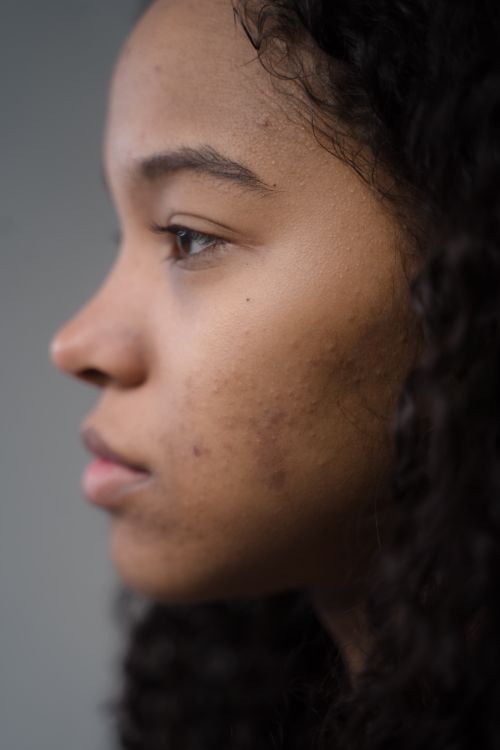
Image: Free photo via Pexels
What affects your final result?
Two patients with near-identical before photos can end up with meaningfully different results from the same procedure. Here's what actually drives that difference:
Skin thickness. Thick nasal skin hides tip structure — you can build definition underneath, but it won't show through as sharply. Thin skin shows change faster and more dramatically, but it's less forgiving of minor irregularities in the cartilage underneath, which can telegraph through as small visible bumps. A good surgeon assesses skin type before finalizing the surgical plan, not after.
Surgeon experience. Rhinoplasty has a reputation among plastic surgeons themselves as one of the hardest procedures to master, because millimeter-level changes produce visible differences and the nasal anatomy varies enormously between patients. A surgeon who performs rhinoplasty regularly, and whose portfolio includes noses with a starting point similar to yours, is a meaningfully different bet than a generalist who does a handful a year.
Cartilage strength. Weak native cartilage may not hold a new shape on its own and needs reinforcement — usually grafted from the septum, ear, or rib — to keep the result stable for the long term rather than drifting as it heals.
Revision risk. 5 to 15% of patients end up seeking a revision after their first rhinoplasty, a higher rate than most cosmetic procedures. That's less a reflection of surgical skill across the board and more a reflection of how unforgiving nasal anatomy is and how long swelling takes to fully resolve before anyone can judge the true result. If revision is on the table, it calls for a surgeon who specializes in revision work specifically — it's a harder procedure than the original.
Rhinoplasty revision: what to know
Revision rhinoplasty corrects a result from an earlier surgery, and it's a genuinely harder operation than the original — the surgeon is working around existing scar tissue, altered blood supply, and anatomy that no longer matches the textbook layout.
The most common reasons patients seek revision:
- A residual hump the first surgery didn't fully reduce
- The tip dropping over time because it lacked adequate structural support
- Asymmetry that was never corrected, or new asymmetry introduced by the first surgery
- Over-resection of the bridge, resulting in a scooped-out "saddle-nose" look
- A pinched or boxy tip appearance from over-narrowing
If revision is crossing your mind, hold off for at least 12 months after the original surgery. A surprising amount of what looks wrong at 3 or 6 months is still swelling, not the final result — and operating on a nose that hasn't finished healing risks fixing a problem that was never actually there.
Cost guide
Cost scales with how much structural work is involved, not with a generic "type" of nose job — a tip-only refinement and a full rebuild with cartilage grafts are priced worlds apart.
| Procedure Type | Typical Cost (USD) | Notes |
|---|---|---|
| Tip rhinoplasty only | $5,000–$8,000 | Simpler scope, often closed approach |
| Bridge reduction | $5,000–$9,000 | Bone work adds complexity |
| Full primary rhinoplasty | $7,000–$15,000 | Open approach, multiple concerns |
| Non-surgical rhinoplasty | $600–$1,500 | Temporary, reversible, no surgery |
| Revision rhinoplasty | $8,000–$20,000+ | Higher cost reflects complexity |
| Functional rhinoplasty | Insurance dependent | Septoplasty for breathing may be covered |
Preview your rhinoplasty results before surgery
Rhinoplasty is permanent, which is exactly why "I think this will look good" isn't good enough as a basis for going ahead. For years, the best patients could do was a generic reference photo of someone else's nose, or a hand-drawn sketch during a rushed consultation.
Makeover.so builds photorealistic preview software for surgical practices, so patients see a projected result on their own face — not someone else's — generated in under 10 seconds from a single photo. That preview becomes something concrete to discuss with your surgeon: does this bridge height look right on my face, does this tip projection match what I described wanting. It turns the consultation into an alignment conversation instead of a guessing game.
If your surgeon doesn't offer this yet, ask. Practices can reach out to Makeover to add it to their consultation process — data handling is built around each practice's requirements, HIPAA-compliant where applicable, and photos are never used to train AI models.