Medical disclaimer: This article is for informational purposes only, does not constitute medical advice, and has not been reviewed by a licensed medical professional. Results vary by individual. Always consult a qualified healthcare provider before making any healthcare decisions.
Quick answer: Laser tattoo removal before and after results show gradual fading across 6 to 12 sessions, with complete removal achievable for most black and dark-coloured tattoos. Each session breaks ink particles into fragments the immune system flushes away over 6 to 8 weeks. Cost runs $150 to $700+ per session in the US in 2026. Picosecond lasers offer fewer sessions for some patients. Total cost for complete removal typically ranges from $1,200 to $12,000+.
What is laser tattoo removal before and after? Laser tattoo removal before and after refers to the session-by-session visual progress of ink fading achieved through laser energy that shatters tattoo ink particles beneath the skin. The "before" shows the original tattoo at full saturation. The "after" at each session shows progressive fading as the immune system clears the fragmented ink. Full removal means no visible tattoo pigment remains. The timeline, number of sessions, and completeness of removal depend on ink colour, tattoo age, and the laser technology used.
This guide draws on 2026 cost data from established US tattoo removal providers, clinical comparison data from PubMed and PMC studies on picosecond versus nanosecond laser efficacy, and market data from published tattoo removal industry reports.
How big is the laser tattoo removal market in 2026?
Removal has stopped being a rare, awkward request and turned into a routine service line at med spas and dedicated laser clinics. The global tattoo removal market grew from $734.81 million in 2025 to an estimated $785.27 million in 2026, and US search volume for "tattoo removal" is running roughly 40% above 2020 levels — a sign that removal is now treated as a normal correction, not an admission of a mistake.
Around 17% of tattooed Americans have considered or pursued removal. Three groups drive most of that demand: people who got their first tattoo before age 25, people whose career or relationships changed after the tattoo went on, and people who ended up with amateur or poorly executed work.
Not every patient wants the tattoo gone entirely. A large share are fading a piece just enough to cover it with new work, or lightening it enough that it stops being visible under a collared shirt or short sleeves at work.
What does laser tattoo removal look like session by session?
Progress is gradual and non-linear. Each session produces variable fading depending on session interval, the patient's immune response, and the specific ink colours treated.
Session 1: The tattoo appears lighter in the immediate days after treatment as the skin is inflamed and the laser has fragmented the outermost layer of ink. Once the skin heals (10 to 14 days), fading may appear modest. This is normal.
Sessions 2 to 4: Visible fading begins to accumulate. Black and dark blue areas typically show the most dramatic change in this window. The outline of the tattoo becomes less sharp. Filled areas begin to look patchy or lighter.
Sessions 5 to 7: Significant fading for most black ink tattoos. Amateur tattoos (which use less ink and shallow placement) are often substantially cleared by session 5 or 6. Professional tattoos with heavy ink saturation show meaningful progress but still have visible remnants.
Sessions 8 to 12: Final sessions target residual stubborn ink. Coloured inks (particularly greens, light blues, and yellows) are still being worked on at this stage for many patients. Ghost imaging, where a faint shadow of the tattoo outline remains, can persist after complete ink clearance and typically fades further on its own over 6 to 12 months.
A 94% clearance rate for black ink tattoos has been documented using Q-switched lasers after an average of 10 sessions, representing the clearest benchmark for what complete removal looks like in practice.
Picosecond vs Q-switched laser: which works better?
Two laser technologies dominate the tattoo removal market: Q-switched (nanosecond) lasers and picosecond lasers. Choosing between them affects session count, cost, and which ink colours respond to treatment.
Q-switched lasers
The established standard for tattoo removal. Pulses last nanoseconds (billionths of a second). They break ink particles using a combination of heat and mechanical pressure. Effective for black, dark blue, and red ink. Widely available and less expensive per session than picosecond technology.
Picosecond lasers
Pulses last picoseconds (trillionths of a second), approximately 1,000 times shorter than Q-switched pulses. The ultra-short pulse creates a stronger photoacoustic effect, shattering ink into finer particles that the immune system clears more efficiently. A PMC prospective comparison study found picosecond lasers more effective for multi-colour tattoos, particularly in treating Asian skin types.
The evidence on which is better
The clinical evidence is more nuanced than marketing materials suggest. Some studies show 30 to 50% fewer sessions with picosecond technology. Others, including a British Journal of Dermatology analysis, found no significant clearance difference between the two approaches. The consensus among practitioners is that picosecond technology may offer marginal session reduction for some patients while costing 2 to 3 times more per session.
| Feature | Q-Switched (Nanosecond) | Picosecond |
|---|---|---|
| Pulse duration | Nanoseconds | Picoseconds |
| Cost per session | Lower | 2 to 3x higher |
| Black ink effectiveness | Excellent | Excellent |
| Coloured ink effectiveness | Good | Better for some colours |
| Sessions required | 6 to 12 | Potentially fewer |
| Availability | Widely available | Less common |
| Skin safety | Established, well-studied | Good, lower thermal damage |
For most patients with standard black or dark ink tattoos, a Q-switched laser from a skilled practitioner delivers complete removal at a lower total cost. Patients with multi-colour work or treatment-resistant ink may benefit from the additional cost of picosecond technology.
How many sessions does laser tattoo removal take?
Most practitioners estimate session count using the Kirby-Desai scale, a clinical scoring tool built around a handful of variables that matter more than anything else:
- Ink colour: Black and dark blue need the fewest sessions. Greens, yellows, and light blues need the most.
- Amateur vs professional tattoo: Amateur tattoos use less ink and are placed more shallowly. They typically clear in 3 to 6 sessions. Professional tattoos with heavy saturation may need 8 to 12.
- Ink age: Older tattoos have already undergone some natural fading. They respond faster than fresh tattoos.
- Skin type: Lighter skin types (Fitzpatrick I to III) allow higher laser energy settings, speeding results. Darker skin types require lower settings to avoid hypopigmentation, requiring more sessions.
- Immune health: The immune system flushes fragmented ink particles after each session. Patients with strong immune function, regular exercise, and good hydration typically see faster fading between sessions.
Typical session counts by tattoo type:
| Tattoo Type | Estimated Sessions |
|---|---|
| Amateur, black ink, small | 3 to 5 |
| Professional, black ink, medium | 6 to 8 |
| Professional, all black, large | 8 to 12 |
| Multi-colour (includes green/yellow) | 10 to 15+ |
| Cover-up tattoo | 15+ (cover-ups have double ink density) |
Sessions are spaced 6 to 8 weeks apart to allow the immune system to clear fragmented ink between treatments. Going too frequently does not accelerate results and increases skin damage risk.
Which ink colours are hardest to remove?
Ink colour determines which laser wavelengths are effective, and some colours absorb laser energy poorly at any available wavelength.
| Ink Colour | Laser Response | Sessions Needed |
|---|---|---|
| Black | Excellent (all wavelengths) | Fewest |
| Dark blue | Excellent | Few |
| Red | Good (532nm) | Moderate |
| Orange | Moderate (532nm) | Moderate |
| Purple | Moderate | Moderate |
| Green | Difficult (requires specific wavelengths) | Many |
| Light blue | Difficult | Many |
| Yellow | Very difficult | Most |
| White | Risk of darkening | Requires test patch |
Tattoos with a mixture of colours take longer because different sessions may target different ink colours using different laser wavelengths. A clinic that offers only one wavelength will struggle to clear multi-colour work completely.
How much does laser tattoo removal cost in 2026?
According to Bookedin's 2026 tattoo removal cost guide, the average cost per laser tattoo removal session in the US is:
| Tattoo Size | Cost per Session (US, 2026) |
|---|---|
| Small (under 2 inches) | $150 to $300 |
| Medium (2 to 6 inches) | $300 to $450 |
| Large (6 to 10 inches) | $450 to $700 |
| Extra-large (over 10 inches) | $700+ |
Total cost for complete removal:
| Scenario | Estimated Total Cost |
|---|---|
| Small amateur tattoo (4 sessions) | $600 to $1,200 |
| Medium professional black tattoo (8 sessions) | $2,400 to $3,600 |
| Large professional tattoo (10 sessions) | $4,500 to $7,000 |
| Full sleeve with colour (15+ sessions) | $10,000 to $20,000+ |
Many clinics offer package pricing with a discount for purchasing multiple sessions upfront. This can reduce per-session cost by 15 to 30%. Verify refund policies before paying for a session package.
The Makeover Tattoo Removal Timeline Framework
We built this scoring framework from the same variables practitioners weigh in a Kirby-Desai assessment, simplified so you can get a realistic session estimate before you ever sit down for a consultation.
| Factor | Faster Removal | Slower Removal |
|---|---|---|
| Ink colour | Black only | Multi-colour including green/yellow |
| Tattoo origin | Amateur | Professional, heavily saturated |
| Tattoo age | 5+ years old | Fresh (under 2 years) |
| Skin type | Fitzpatrick I to III | Fitzpatrick IV to VI |
| Size | Small to medium | Large or sleeve |
| Immune health | Active lifestyle, well-hydrated | Smoking, poor lymphatic circulation |
| Laser technology | Picosecond | Q-switched (for coloured ink) |
Estimated timeline: Add 1 point for each "Faster" answer and 2 points for each "Slower" answer. Total 7 points or fewer suggests 6 to 8 sessions. Total 8 to 11 points suggests 8 to 12 sessions. Total 12+ points suggests 12 to 20+ sessions.
This framework is a planning tool, not a clinical assessment. A patch test and in-person consultation with a qualified laser practitioner produces the most accurate session estimate for your specific tattoo.
What to expect after each session
Understanding post-session healing prevents panic over normal reactions and supports optimal outcomes.
During the session
Treatment time itself is short — a few minutes for a small tattoo, longer for a large piece worked in sections. Most clinics apply a topical numbing cream 30 to 45 minutes before the laser starts, and many pair it with a cooling device (an air chiller or ice roller) to blunt the sensation further. It is uncomfortable, not unbearable, and it is over quickly: sessions on small to medium tattoos are often finished before the numbing cream has fully worn off.
Immediately after treatment (0 to 6 hours)
The treated area turns white immediately after laser contact (called "frosting") as carbon dioxide is released from the skin. This resolves within 20 to 30 minutes. Redness, swelling, and warmth are normal. An ice pack and loose clothing help with discomfort.
Days 1 to 3
Blistering is common and does not indicate scarring. Blisters are a sign of a good immune response breaking down ink particles. Do not pop blisters. Keep the area clean and cover with a non-stick dressing. Avoid sun exposure.
Days 4 to 14
Blisters flatten and crust forms. The area heals from the outside in. Avoid picking at any crust. Moisturise with a fragrance-free product.
Weeks 2 to 8
The immune system continues to process and flush fragmented ink particles. Visible fading continues even when the skin surface appears fully healed. The fading you see at your next session appointment reflects both the laser work and the weeks of immune processing between sessions.
Sun exposure rule (non-negotiable): Treated skin must be protected from sun exposure for the full duration of the removal course, not just the first two weeks. Tanned or sun-damaged skin absorbs laser energy differently, increasing the risk of hypopigmentation (permanent lightening of the skin around the tattoo). Apply SPF 50 to the treated area whenever it is exposed to daylight and avoid deliberate tanning. This is the most commonly ignored aftercare instruction and the one most likely to affect the quality of your final result.
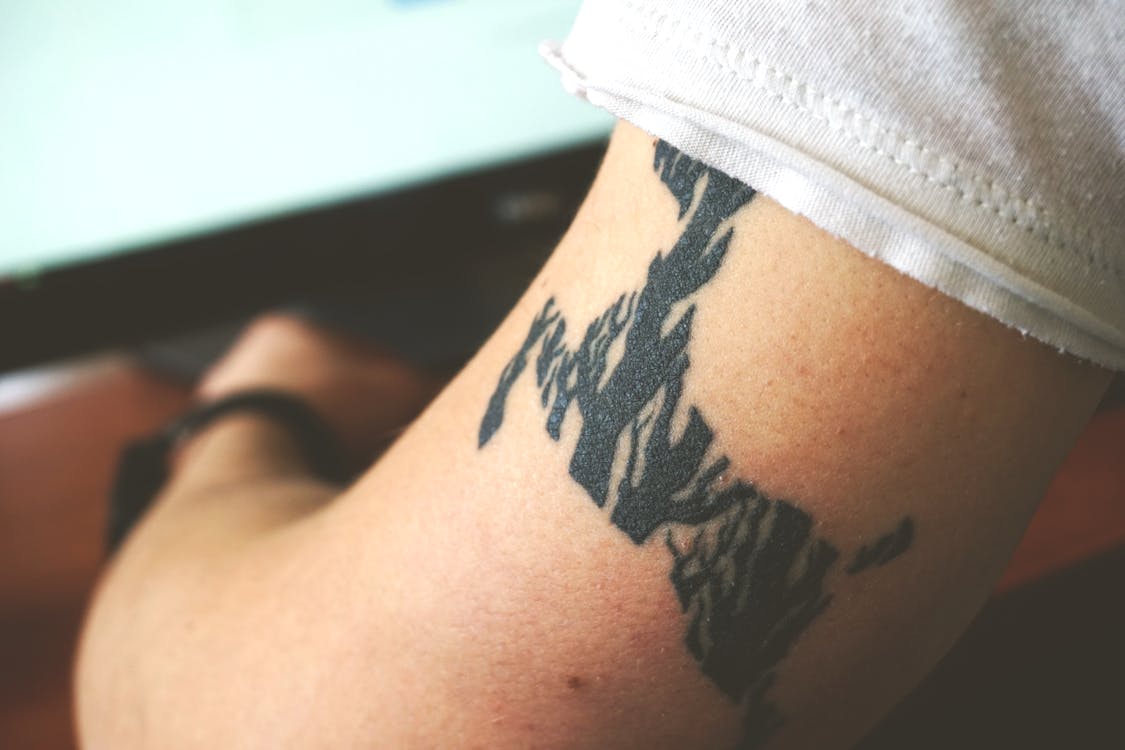
How to preview your tattoo removal result before starting
The most common barrier to starting laser tattoo removal is uncertainty about what the final result will look like. Will it be completely gone? Will there be ghosting? How will the skin look without the tattoo?
Makeover builds custom AI preview software for med spas and removal clinics to answer this visually. During a consultation, the clinic uploads a photo of the tattoo, selects the removal preview, and the tool generates a photorealistic simulation of progressive fading and complete removal on the patient's actual skin in under 10 seconds.
This preview serves two purposes. It confirms whether complete removal or significant fading meets the patient's goal. And it provides a concrete before-and-after to bring to the initial consultation, helping the practitioner understand the target outcome and identify any ink colours that may be particularly resistant.
For patients who are considering covering a faded tattoo with new work rather than full removal, a preview of the cover-up result can be built the same way. See our guide to tattoo removal before and after for a broader comparison of removal methods beyond laser.
See how Makeover builds preview tools for removal clinics →
Ready to preview your tattoo removal result?
Ask your tattoo removal clinic if they offer a Makeover-built AI preview tool, or if you run a clinic, share your details with Makeover to discuss building one for your patients.